Landau, July 17, 2026. It has now become a tradition: Sphenisco’s general meetings consistently take place in high temperatures. For years, we’ve experienced this firsthand in the Landau Zoo School’s meeting room. Our board therefore had every reason to look for a location that might offer some relief from the heat even without air conditioning in midsummer. By choosing the community room at the assisted living facility on the Bethesda Campus in Landau, the board made a good and wise decision, as Werner Knauf had personal experience with the location and therefore highly recommended it. But neither he nor the attending members and guests could have anticipated that they would once again be put to a tough test. The extreme heat had made its way there as well. A fan could only provide some relief to the guests in the front part of the room. So the tradition continued. Thankfully, there were plenty of bottles of water available, and everyone agreed: We wouldn’t have been able to stand it at the Zoo School that afternoon. Consequently, we were sweating in a better place.
Despite the heat warnings, it was beyond question in the board’s mind to cancel the general meeting at short notice. The surprisingly high number of attendees proved them right. Werner Knauf had expected more cancellations and, in his welcome remarks, expressed his delight that so many members had come. They came from Bochum, Nuremberg, Hanover, Saarbrücken, Karlsruhe, and Berlin, among other places, in addition to members from Landau and the surrounding area. Several residents of the assisted living facility were also in attendance. Werner had every reason to give a special welcome to another member in addition to zoo director Jens-Ove Heckel. Marc Fälker had traveled from his hometown of Unna, just as he had done years ago. Due to the current unreliability and frequent breakdowns of the rail service, he had decided this time to take a taxi for both the outbound and return trips. He granted me, the author of this report, permission upon my request to state the amount of the travel expenses for the round trip here. It was worth 700 euros to Marc to attend the general meeting and reconnect with his fellow club members after a break of several years. We know and appreciate Marc’s modesty. By disclosing the amount of his travel expenses, he by no means intended to draw attention to himself. That is far from his nature. On behalf of all participants, let’s mention with great appreciation: Fantastic, dear Marc! We tip our hats to you and your extraordinary demonstration of loyalty to the club.
During the first part of the event, those in attendance were impressed by the activities in Chile and Peru. In response to the call from the NGO Acorema and its partners, 5,000 people joined a demonstration to protect the Humboldt penguin. Carrying banners, they marched through the streets of the city of Pisco. The posters read “Let’s save the Humboldt penguin! It’s not a toy and it’s not food!”.
Acorema promotes these messages in schools and kindergartens as well as through workshops and other projects. Furthermore, the organization reaches out to politicians, reminding them to fulfill their obligations to protect seabirds. Nancy Duman, joining via video conference, looked back on numerous successful activities in her presentation. These include photo exhibitions and the distribution of the textbook “Appreciating the Humboldt Archipelago” to numerous schools. The literary contest “The Humboldt Archipelago in 110 Words” is set to continue. She noted that it is difficult to achieve anything under the current conservative government. Nevertheless, they will continue to appeal to politicians and demand better protection for threatened species and their habitats.
However, these positive reports were overshadowed by the opening remarks by Dr. Guillermo Luna-Jorquera. The decline in the population in both Chile and Peru by more than half—caused by bird flu, El Niño, and human impacts— gives cause for grave concern. His appeal: more science, more environmental education, and public relations activities to convince decision-makers to better protect sensitive species and ecosystems. The members of Sphenisco are aware that, as a small organization with their dedicated colleagues in Chile and Peru, they cannot make a difference against El Niño and bird flu. However, human impacts such as overfishing, “bycatch“, destruction, or disturbance of breeding grounds should be reduced with even greater commitment.
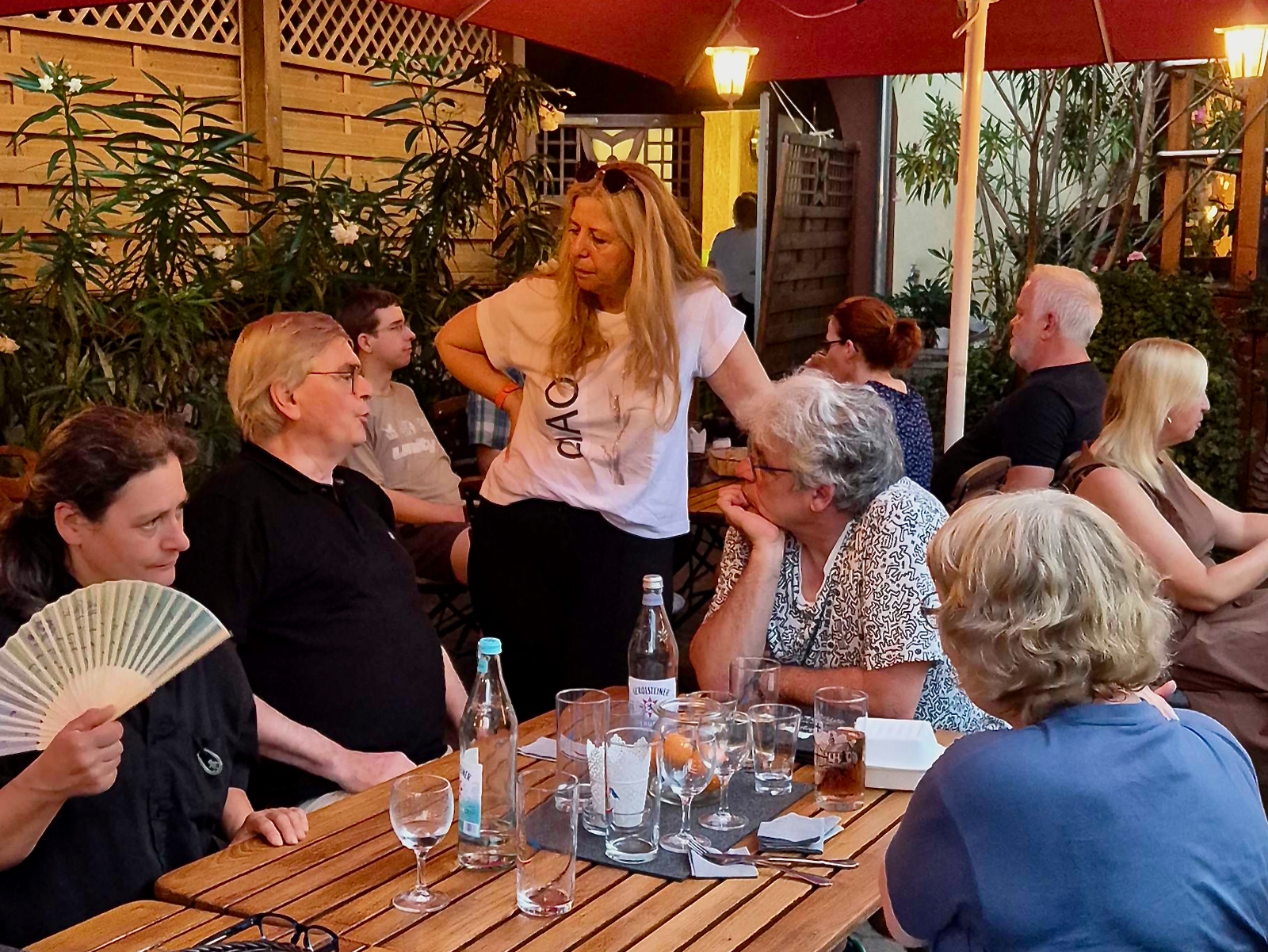
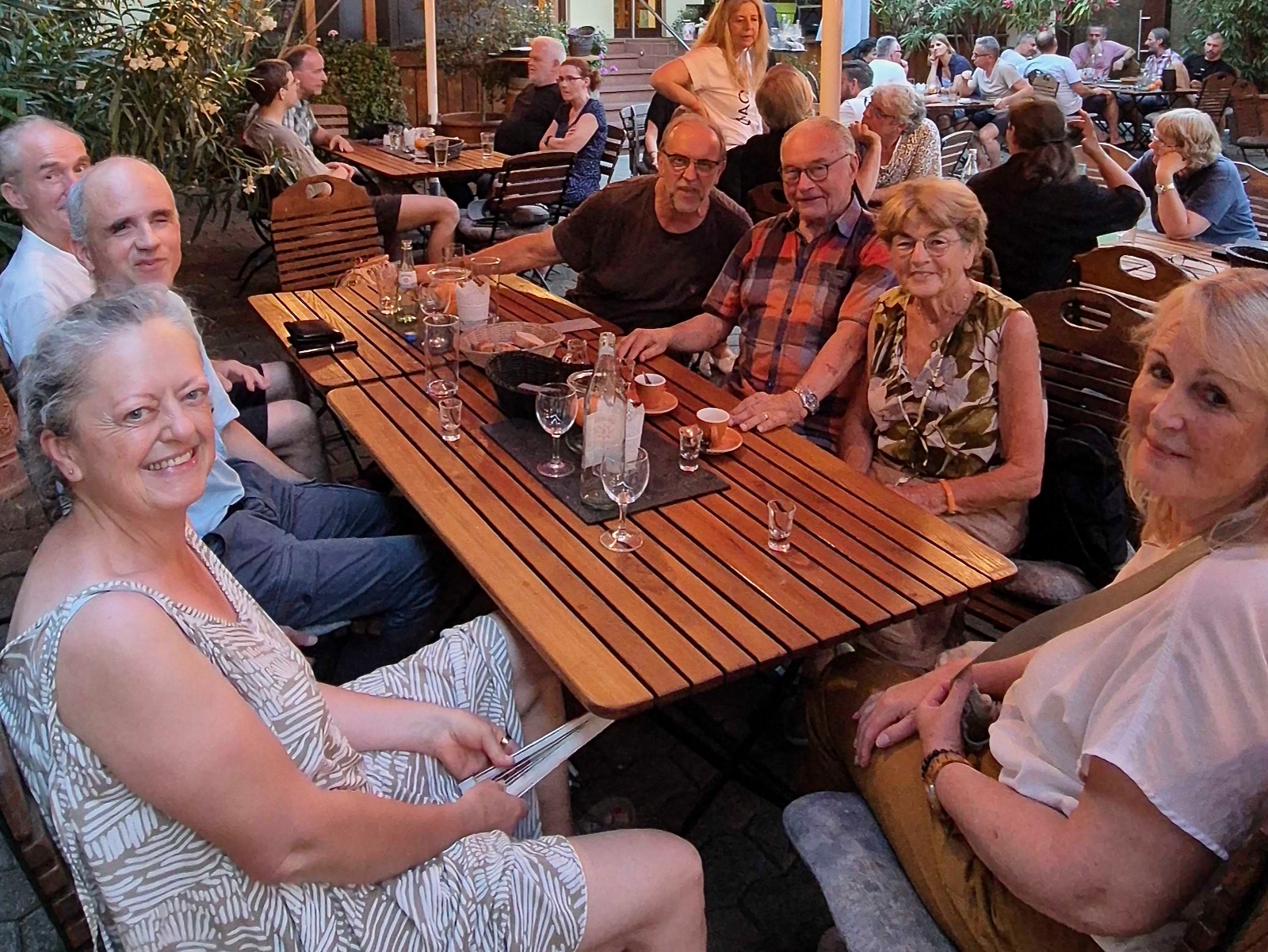
Our Sphenisco Day came to a close in a friendly gathering at the Hoppeditzel restaurant in Impflingen. We spent some entertaining, cheerful hours enjoying solid meals, a good glass of Palatinate wine, and—at our table—even a bit of a Spanish atmosphere. After all, even late into the evening, some of the ladies were still constantly fanning themselves—which was all too understandable on this particular day.
Hans-Joachim Schatz
translated by Angelika Veelken using/reviewing deepl.com