Landau 11. September 2026.
In the southern spring of 2025, researchers Dr. Ursula Ellenberg (1) and Maximiliano Daigre Valdés (2) once again investigated the foraging of Humboldt penguins from the islands of Cachagua and Choros in northern Chile. The research is part of the studies on population, breeding success and foraging that have been carried out since 2021 under the direction of Dr. Alejandro Simeone (3). The multi-year research project was commissioned by Sphenisco and is funded by the Karlsruhe Zoo Conservation Foundation, Dresden Zoo and the Hagenbeck Zoo Association. At the end of June 2026, Ursula Ellenberg (1) and Maximiliano Daigre Valdés (2) presented a report on the investigations in the period from 21 November to 13 December 2025. The report is entitled "On the Trail of the Humboldt Penguins" (4). On 3 September 2026, Ursula Ellenberg also reported on the results at the 12th International World Penguin Conference in Australia (5). The following text reproduces the summary of the authors as well as short excerpts of the preliminary results:
"Summary
From 21 November to 13 December 2025 we observed breeding Humboldt penguins (Spheniscus humboldti) on the three islands (Cachagua, Pajaros and Choros) in Chile. A total of 15 GPS dive data loggers were attached to adult Humboldt penguins during their "waking phase" to study their paths at sea and diving behavior. On the island of Cachagua (November 21–27), we used 10 GPS data loggers as well as (for the first time!) two PenguCams. The few penguins we found while counting nests on the island of Pajaros (December 4–7) had difficulty raising their chicks. The many green droppings around the nests indicated poor feeding conditions. The adults on Pajaros were found to be too lean to attach data loggers. When recording the Humboldt penguin nests on the island of Choros (8–12 December), we spontaneously decided to install five GPS dive data loggers to be able to compare the current feeding conditions with the extensive tracking data from 2022. All data loggers were successfully recovered.
All work on location was carried out by Maximiliano Daigre and Ursula Ellenberg. The data on nest counting in the breeding season has already been presented in a separate report as part of the general census of the Chilean population (see article "Population (...) reduced", see article on this website of 25 March 2026).
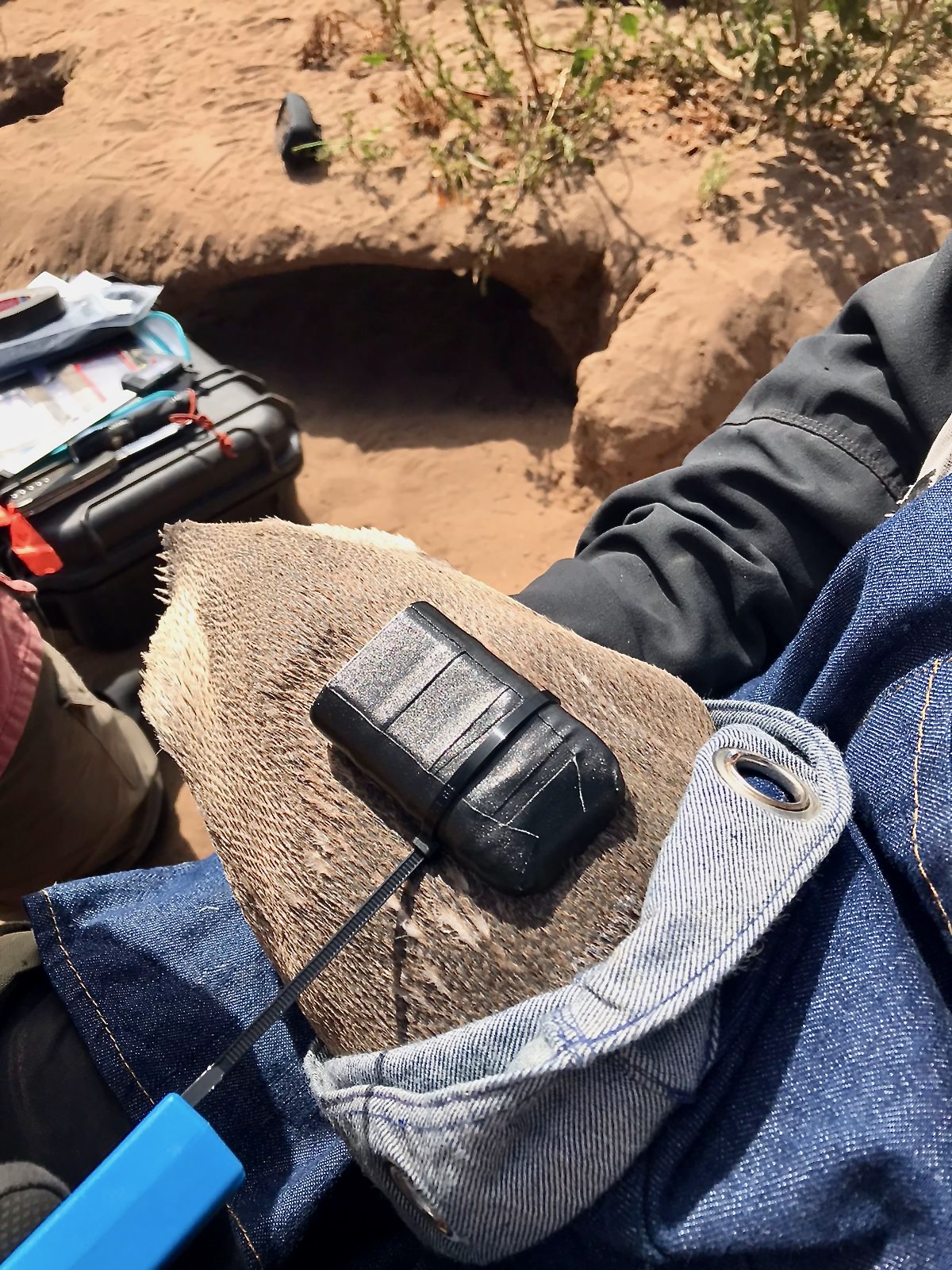
1. We tagged 17 breeding adult penguins (8 females, 9 males) with transponders (Trovan, 11 mm) and simultaneously tagged 15 GPS dive data loggers (AxyTrek, TechnoSmart, Italy, https://www.technosmart.eu/). The loggers recorded the geographical position (via a GPS receiver, recording every minute) and diving data (via a pressure sensor, recording every second). In addition, two high-resolution video cameras (PenguCam, New Zealand, https://pengu.cam/) were utilized.
2. The penguins on Cachagua mainly bred in fragile burrows. In contrast, all birds that were equipped with GPS data loggers on Choros nested under cacti. The nests were selected according to their accessibility. In other words, we were careful not to disturb neighboring penguins and not to cause nearby nests to collapse. All birds selected for the installation of the data loggers were in good condition and cared for healthy chicks one to four weeks old.
3. All 17 birds were found after one to three days in good condition and with a similar body weight as before the devices were attached. One penguin, a male equipped with a "PenguCam", did not leave the nest. The female provided the chicks with food for two consecutive days. All the devices were successfully recovered and provided good data – apart from the male who decided to stay at home.
4. All birds continued to care for their chicks even after the loggers were attached. Due to difficult weather conditions and time constraints, we did not revisit the islands. Previously installed surveillance cameras overlooking penguin breeding sites provided valuable data, which is now being analyzed in more detail to gain a better, more comprehensive understanding of the success of reproduction on the island of Cachagua.
5. The logger provided GPS and diving data for 15 birds (7 females, 8 males) from individual foraging expeditions (14 expeditions were recorded for 10 birds equipped with loggers on the island of Cachagua, 10 expeditions for 5 birds equipped on the island of Choros. The median duration of the expeditions was 14 hours (range 1.2 – 27.6 hours). The duration of the expeditions was comparable for both islands.
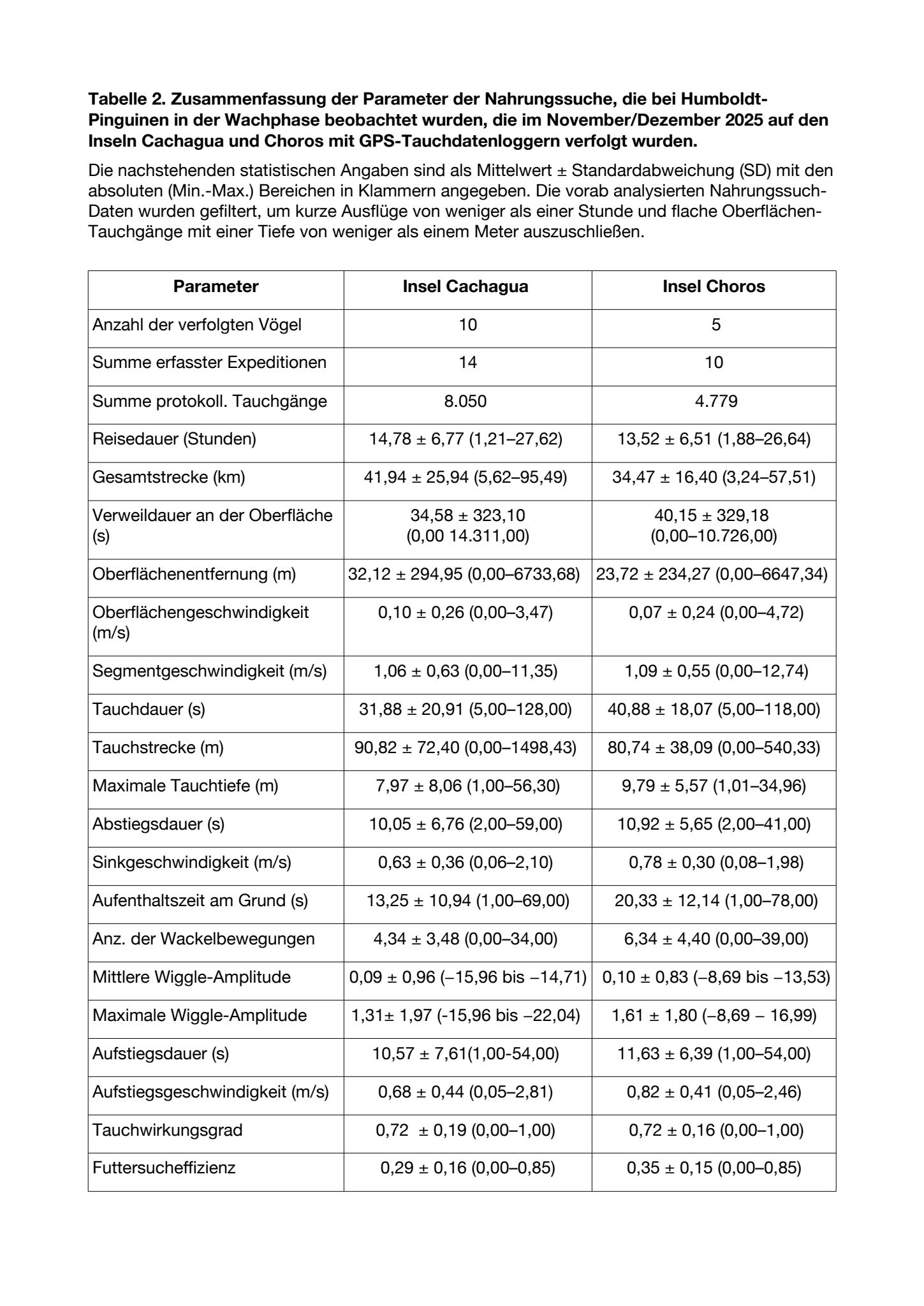
6. Individual birds undertook one to three foraging expeditions per logger installation. The average distances covered by the penguins of Cachagua (41.9 km, range 5.6 to 95.5 km) were significantly longer than the 34.5 kilometers for the birds of the island of Choros (range 3.2 km to 57.5 km).
7. A total of 8,050 dives were recorded from the Cachagua penguins (N=10) and 4,779 dives in the birds of Choros Island (N=5). The latter dived deeper and longer on average (see Table 2 Summary of Parameters, s. PDF). The penguins breeding on Choros Island probably adapted this foraging strategy to take advantage of deeper and less dense prey deposits in the less productive waters in the north.
8. The PenguCam used on the island of Cachagua provided five hours of excellent foraging footage. The footage shows a multi-species group in front of the village of Maintencillo, with the Quintero industrial complexes in the background.
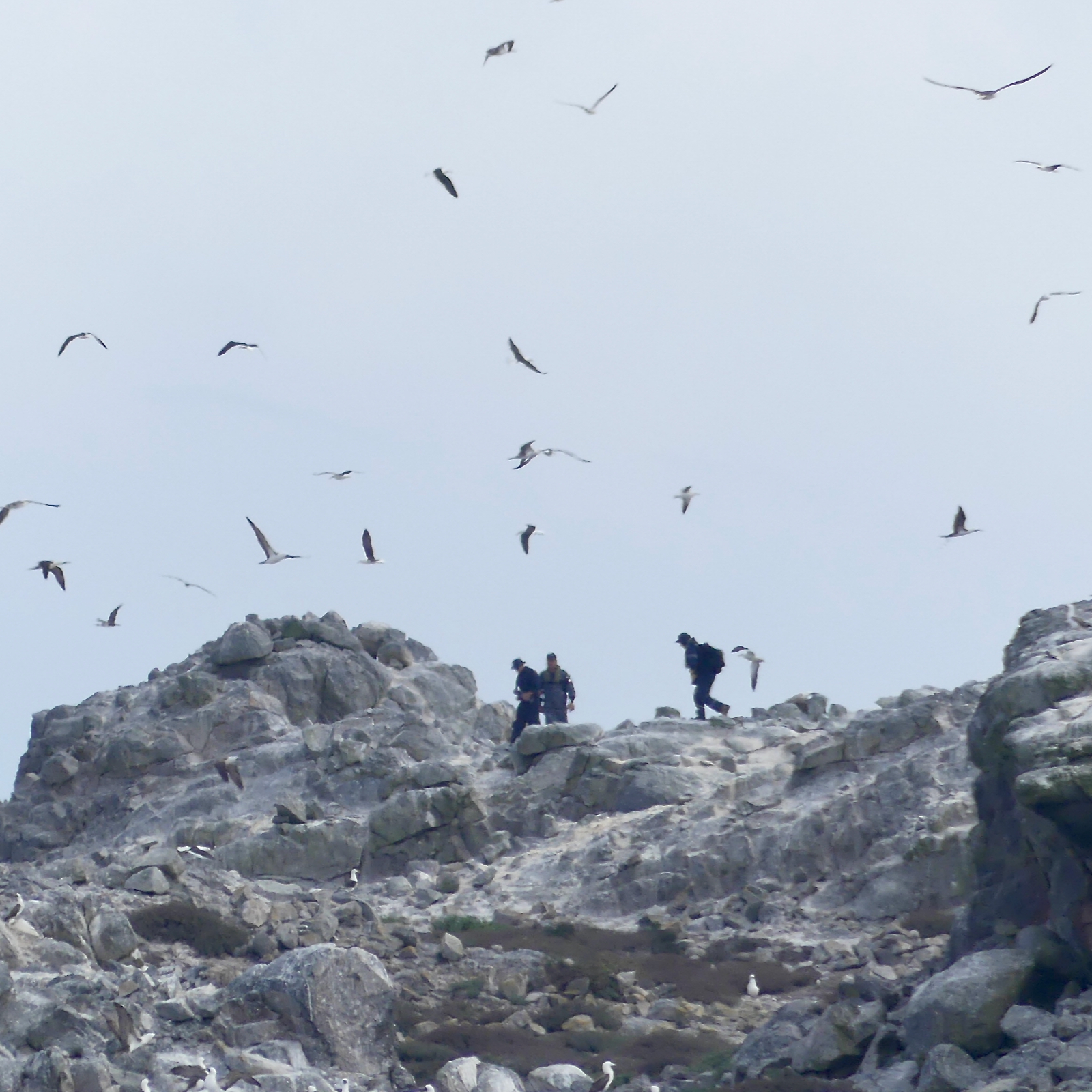
9. On the morning of December 7, 2025, we witnessed a routine operation by the Chilean Navy (Armada). The soldiers landed on the island of Pajaros to maintain the lighthouse. The lighthouse had functioned without any problems during the previous nights of our stay. Four men crossed the island, with no regard for breeding birds. Thousands of breeding boobies were thus driven out of their nests. As a result, hundreds of eggs were lost to kelp gulls and the affected pairs lost their brood completely.
10. We recommend limiting routine maintenance in the area of the Humboldt Buoyancy System, which requires landing personnel on seabird breeding islands, to the late March/early April period. At this time, most bird species have completed their breeding season and the penguins have completed their annual moulting.
11. In addition, we recommend stricter biosecurity measures to reduce transmission of diseases between islands. As scientists, we clean, wash and disinfect all our equipment between visits to different islands. Therefore, we were surprised to learn that the Navy planned to check the lighthouses on Damas Island and Chañaral Island on the same day with the same equipment. (...)
Preliminary Results
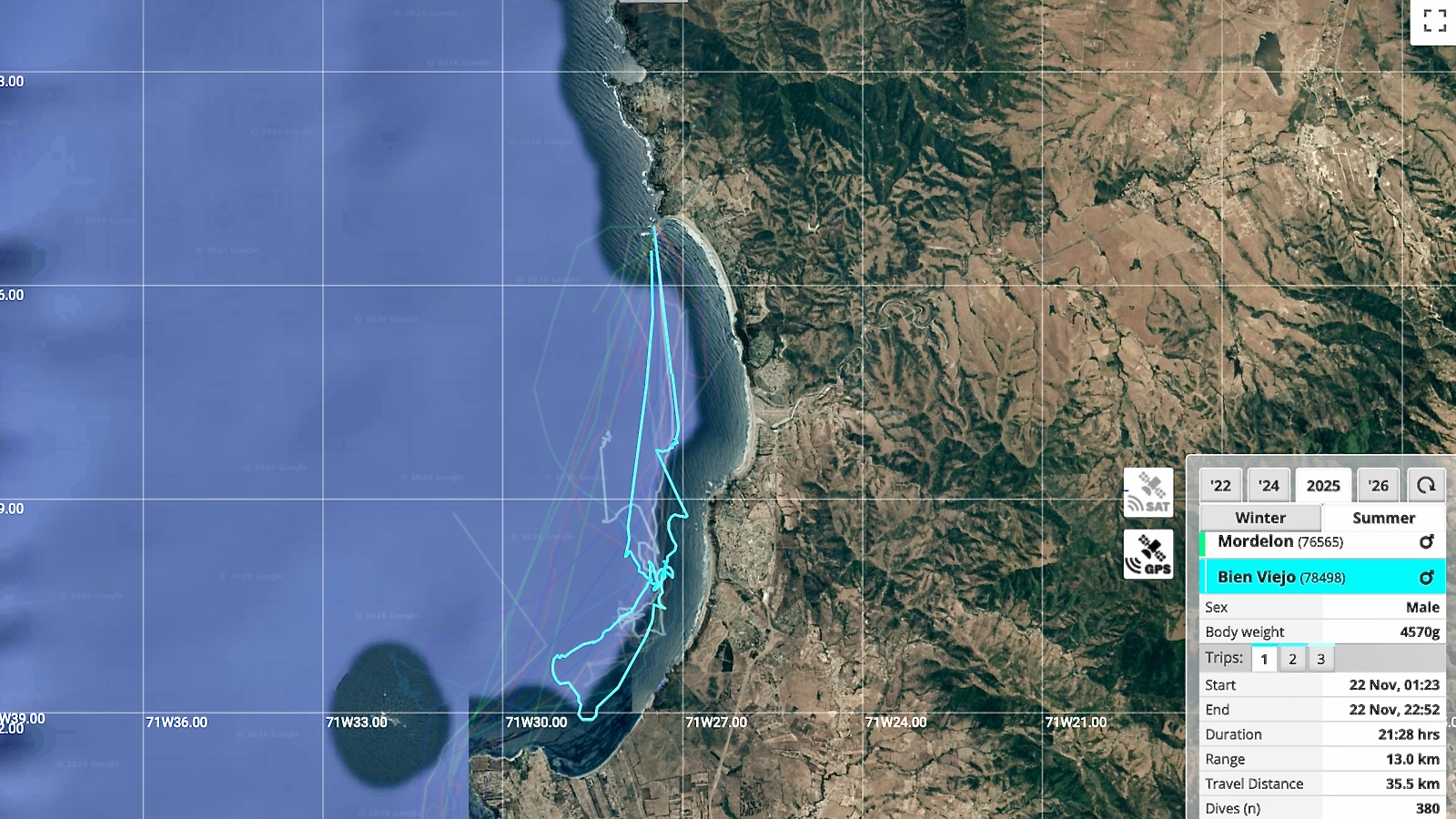
(...) Similar to previous foraging records (2022 and 2024) during the breeding watch, both Humboldt penguins from Choros Island and the penguins from Cachagua Island foraged for food extremely close to the coast. Most of the trips took place within 8 kilometers and most of the foraging took place less than 5 kilometers from the coast (see photo "Bien Viejo"). The penguins mostly foraged close to the surface. The average maximum diving depth in 2025 was even lower than what we had observed in 2024 (10.1 m, dispersion 0.5 m to 74.5 m).
All birds searched for food south of Cachagua Island, with the majority of the search taking place within 20 kilometers south of the breeding island. The observed orientation to the south was to be expected, as wind and currents that carry information about the availability of prey came from the south during the period of the surveys. For more detailed information, please visit our website: https://www.penguintracking.org/humboldt/gps2025/?stage=Summer
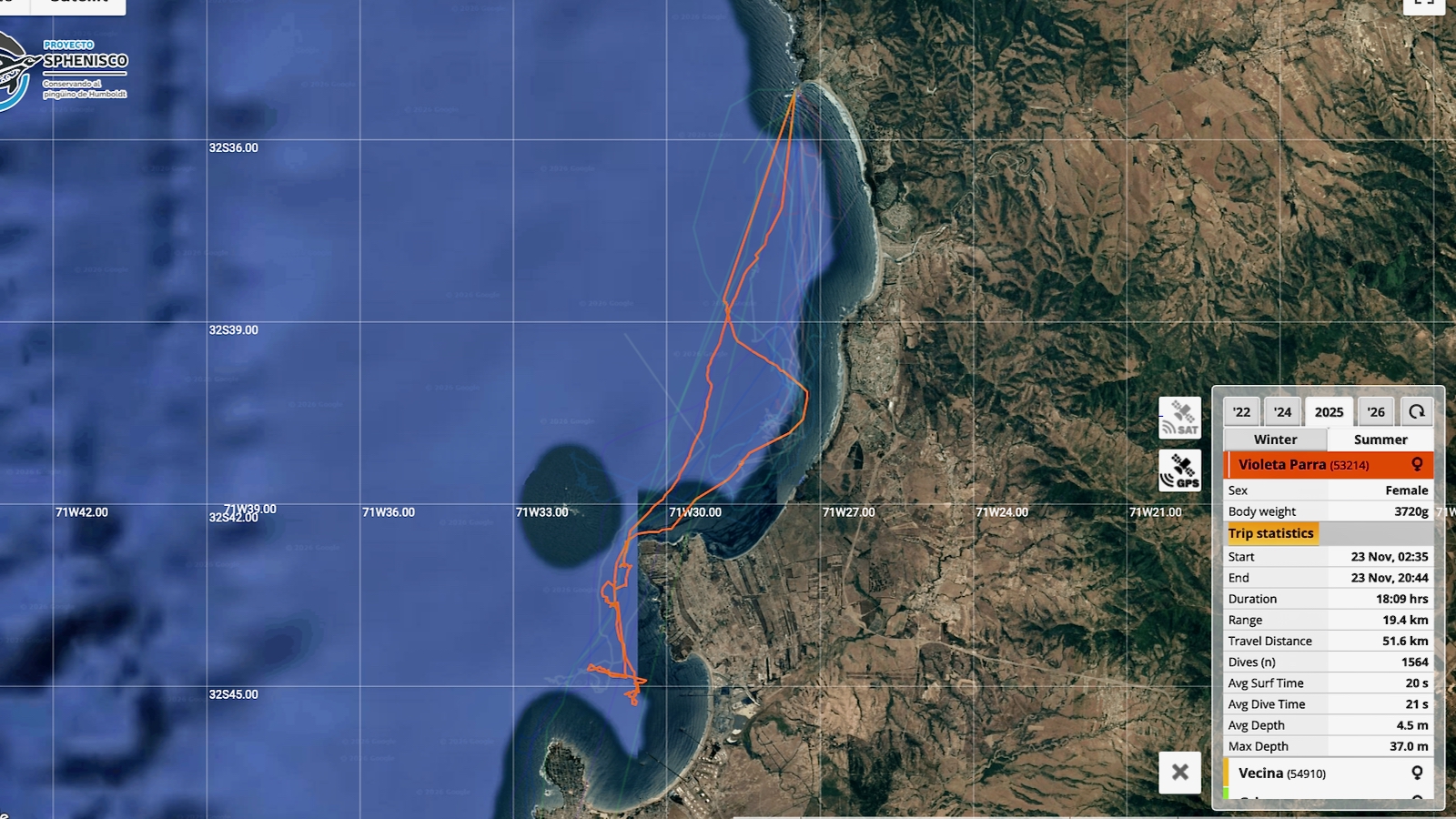
Interestingly, and similar to 2024, five birds were foraging for food just off the bay of Quintero (an extremely industrialized area). Twice, females (Gris & Violetta Parra) even entered the bay to forage for food in the midst of the port's industrial activities (s. Photo Violetta Parra).
Three strong males (Turnstone, Fortachon & Petro Pascale II), on their way south towards the estuary of the fish-rich Aconcagua, also spent some time off the coast of Quintero in search of food.
(…) Remarkably, it was an old male Humboldt penguin nicknamed "Bien Viejo" that searched for food exclusively off Maintencillo during three consecutive expeditions (see photo "Bien Viejo"). There was a lot of grease attached to his feathers, which gave off an intense chemical smell. It is unclear whether his "old" appearance was due to advanced age or to the wear and tear of the feathers due to chemical stress.
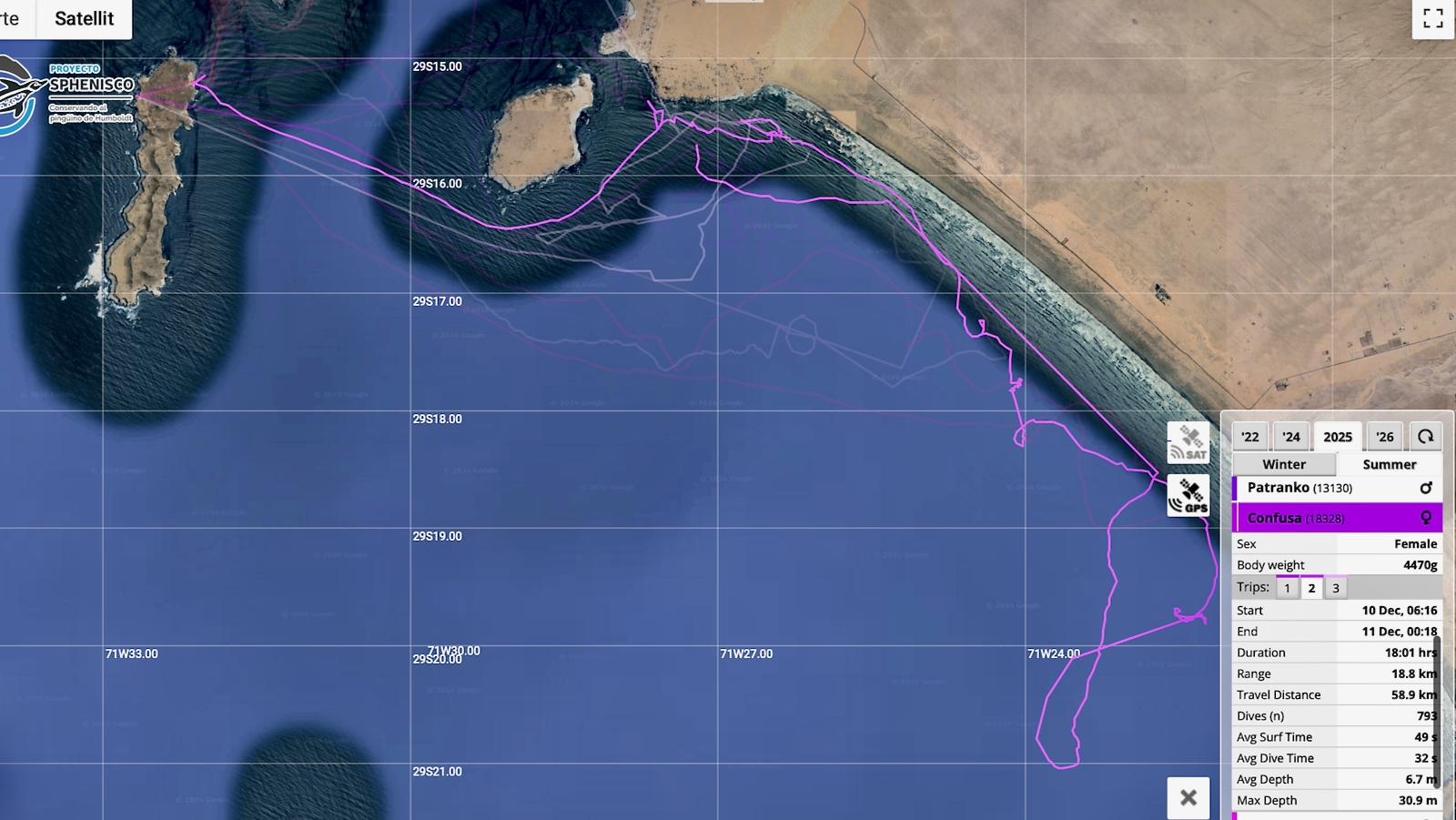
On the island of Choros, we observed foraging behavior comparable to that observed in 2022. Most birds foraged for food in the immediate vicinity of the coast (see photo "Confusa"). This raised concerns about an increased risk of penguin bycatch from coastal fishing with gill nets.
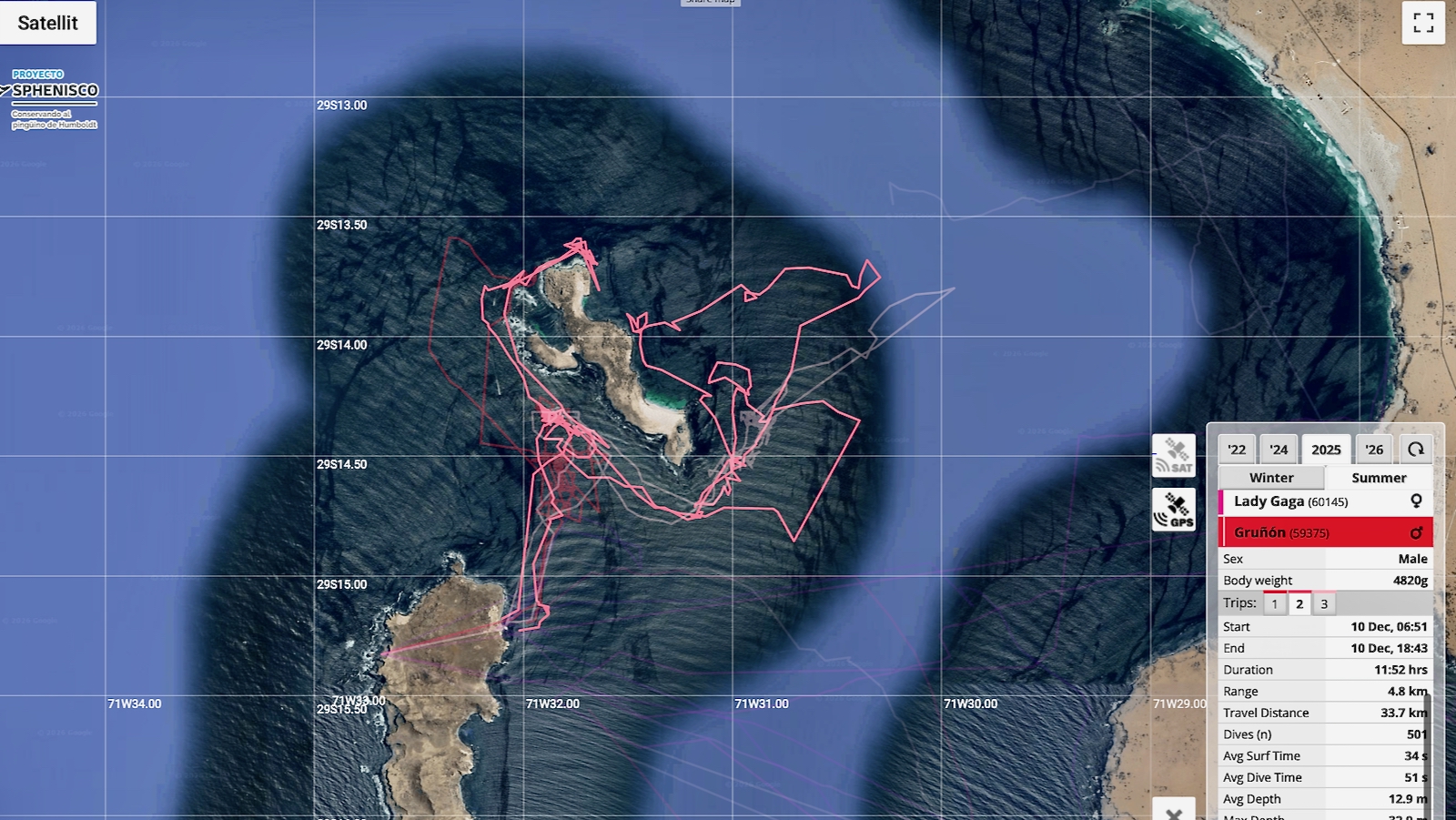
An exception was "Gruñón" (grumpy), a large male. "Gruñón" made three consecutive day trips of 10-11 hours each from 9 to 11 December to search for food in the shallow waters around Damas Island (see photo "Gruñón"). It was very fortunate that we were able to catch him again on the last night of our stay on the island. He weighed an impressive 5,235 kg, making him significantly heavier than at the time when we equipped him with the logger , although he had already fed his chicks that evening and moved on to a quieter, uninhabited nest nearby. "Gruñón" lived up to his name and was quite grumpy because he had to deal with us again.
But the effort was worth it ..."
W.K.
Notes
For better readability, the generic masculine is used in this article. The personal names used in the article refer to all genders – unless otherwise indicated.
(1) Dr. Ursula Ellenberg. Global Penguin Society, Tawaki Trust, University of Otago, New Zealand.
(2) Maximiliano Daigre Valdés. Humboldt Penguin Research Group, Santiago, Chile.
(3) Dr. Alejandro Simeone. Andrés Bello University (UNAB), Humboldt Penguin Research Group, Santiago, Chile.
(4) On the trail of Humboldt penguins. Isla Cachagua and Isla Choros, Chile November 21 – December 13, 2025.
(5) Living with the enemy: Humboldt penguins appear to defy fisheries and coastal development in central Chile. Living with the enemy: Humboldt penguins seem to defy fishing and coastal development in central Chile.
translated by Erich Greiner