Nuremberg, 28 September 2026
Part 2
"Decline of Humboldt penguins in Chile and Peru"
"News about foraging of Humboldt penguins"
"Methods for counting Humboldt penguins"
"New technologies for use in penguin research"
Day 3, 02.09.2026
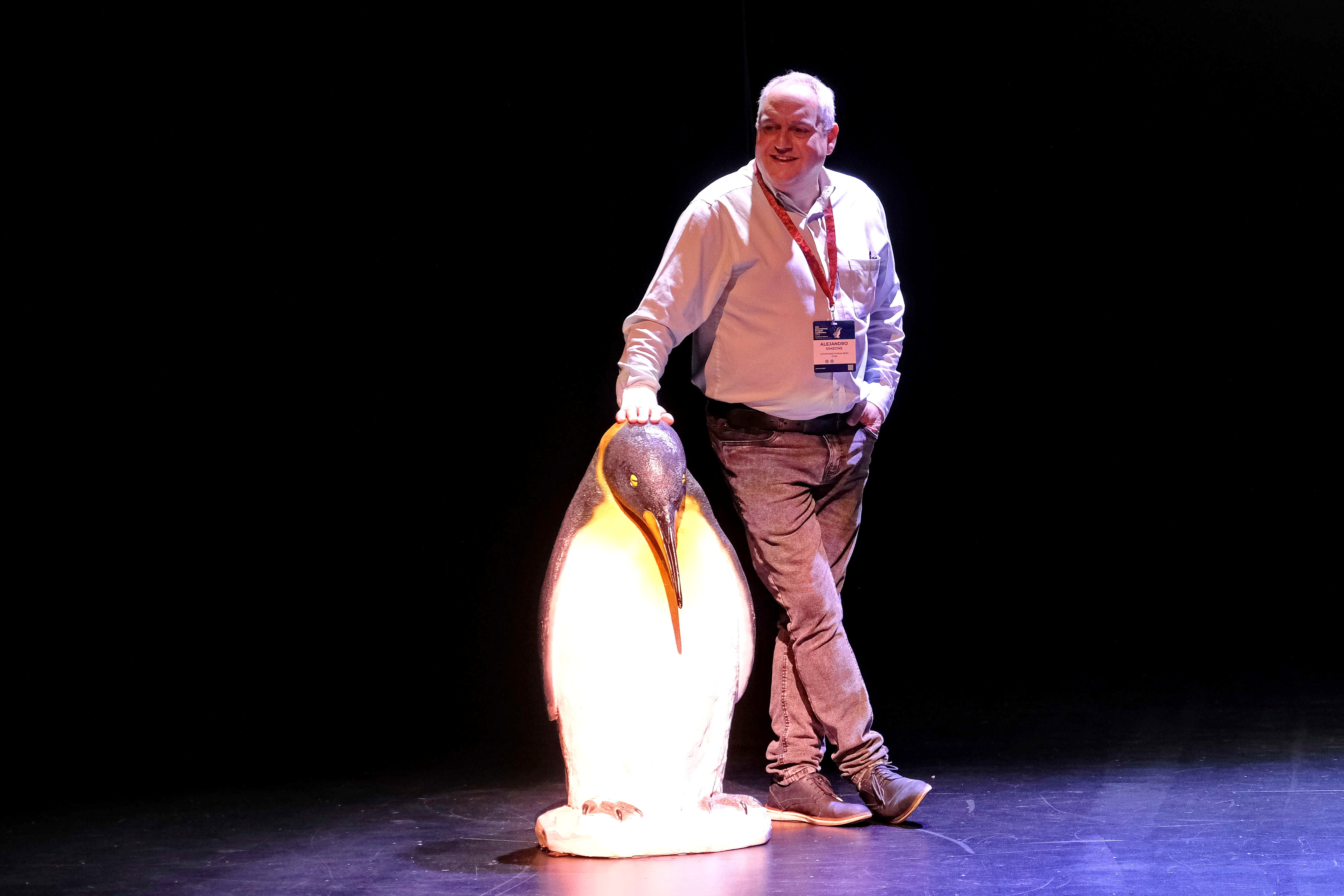
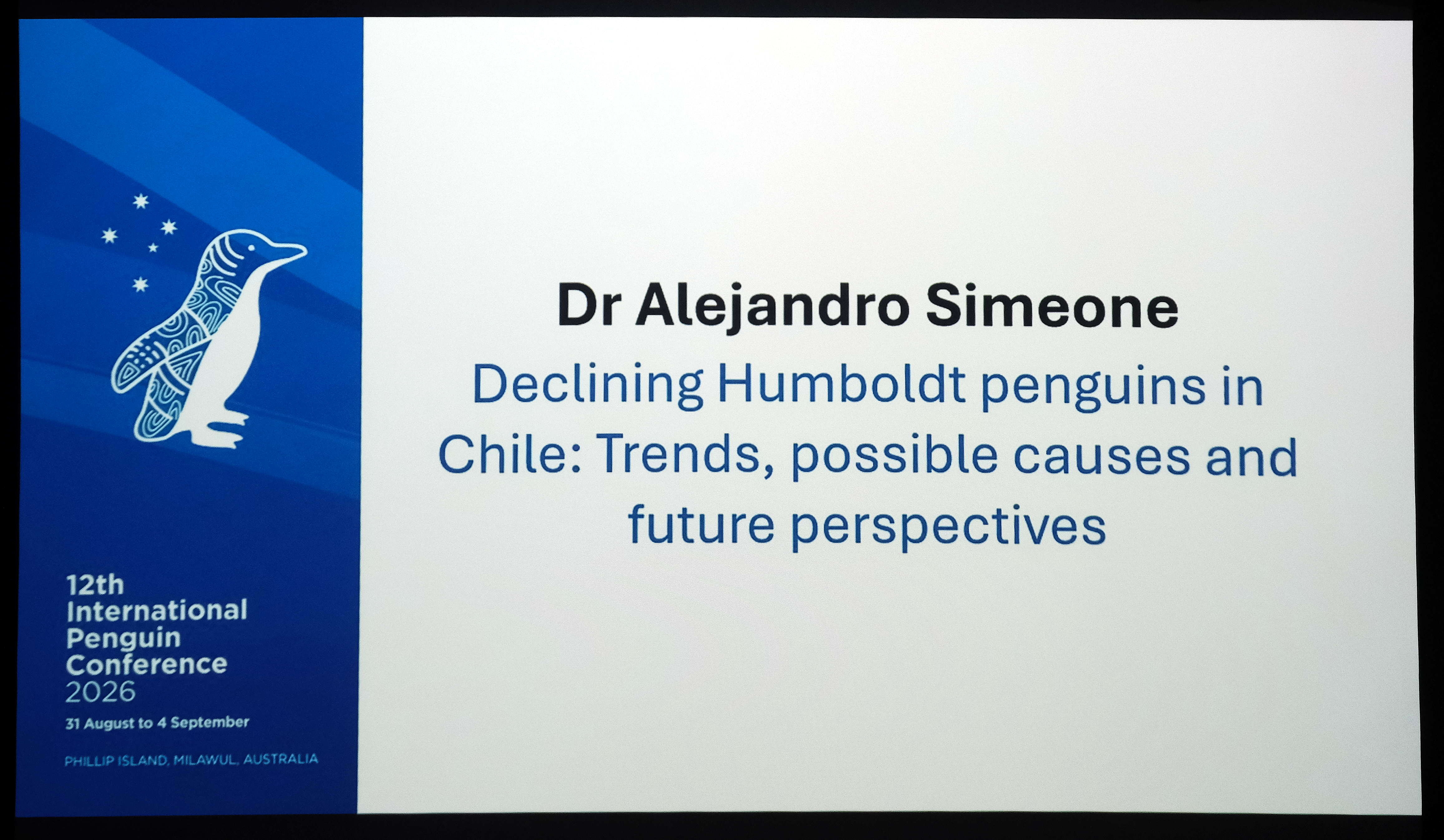
On the third day of the conference, further lectures on research results on Humboldt penguins loomed large: In his lecture "Declining Humboldt penguins in Chile: trends, possible causes and future perspectives" (1), Dr. Alejandro Simeone presented the results of monitoring programs on the population development of Humboldt penguins in Chile, also funded by Sphenisco e.V.
Dr. Simeone explained that half of the world's 18 penguin species are currently considered endangered and that the populations of 12 species are declining significantly. The Humboldt penguin itself is present in the wild exclusively from northern Peru to southern Chile, and is classified as "critically endangered" regionally - due to sharply declining populations.
In order to characterize long-term population trends of the Chilean Humboldt penguin population, Dr. Simeone's research group analyzed available data for the period 1980–2025. Only data that indicated the maximum number of breeding pairs from direct counts for a specific colony and year were taken into account. For example, data were evaluated for seven colonies along the Chilean coast between 26° and 33° south latitude. Together, these colonies comprised about 8,000 pairs in the 1980s, but only about 2,000 pairs in the 2020s, which corresponds to a decline of 75% in 40 years or about three generations.
During the period under study, four colonies (Pan de Azúcar, Chañaral, Huevos and Pájaro Niño) declined at an average rate of 5.1 to 8.1 % per year; the largest absolute losses occurred in the 1980s and 1990s. The remaining colonies (Choros, Pájaros and Cachagua) did not show clear trends.
The role of relevant threats, including interactions with fisheries (mortality and resource competition), introduced species and, most recently, disease outbreaks, was discussed. In addition, it was discussed how the use of different methods contributed to the overestimation of the population size of this species. The study was also supported by Sphenisco e.V. in cooperation with the Universidad Andrés Bello (Chile).
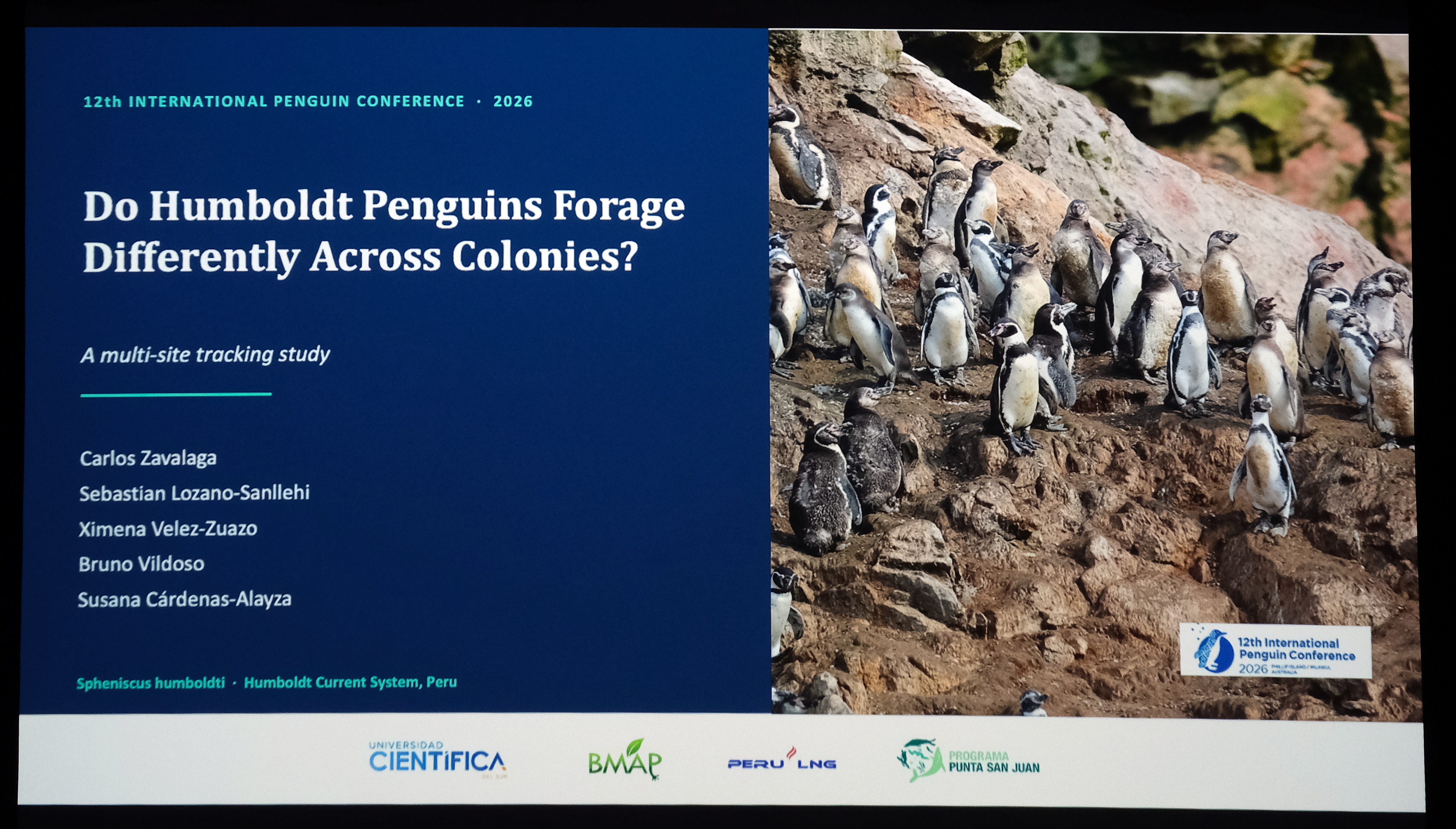
In the subsequent lecture „Do Humboldt penguins forage differently across colonies? A multi-site tracking study “ (2), Dr. Cárdenas-Alayza, representing Dr. Carlos Zavalaga, argued that understanding spatial differences in foraging behavior is crucial to assessing how seabird populations respond to environmental variability and human activities.
The movements of Humboldt penguins during chick rearing at sea at three colonies in south-central Peru were studied using GPS data loggers: Melchorita (MEL), Chincha Norte Island (CHN) and Punta San Juan (PSJ). This study is the first multi-colony investigation of foraging ranges and core use areas of this species within the Humboldt Current system.
Colony-specific differences in movement patterns were observed, including differences in the maximum foraging range (MEL = 24 km, CHN = 28 km, PSJ = 30 km) and in the spatial concentration of the core areas (MEL = 18 km², CHN = 52 km², PSJ = 136 km²). Across all colonies, the penguins showed more thanCoastal foraging strategies, with most of the activity taking place relatively close to the breeding sites. The core areas were spatially structured and often overlapped with zones used by artisanal and commercial fisheries. These patterns suggest that potential interactions with fisheries are locally limited and colony-specific.
Through the first comparative framework of the foraging ecology of Humboldt penguins at several colonies in Peru, the study provides new insights into the spatial ecology of the species and its exposure to human activities. The data provide a valuable basis for identifying use priorities and understanding the interaction of penguins with heterogeneous marine environments. The results underline the importance of colony-specific dynamics in conservation planning and fisheries management in the Humboldt Current ecosystem.
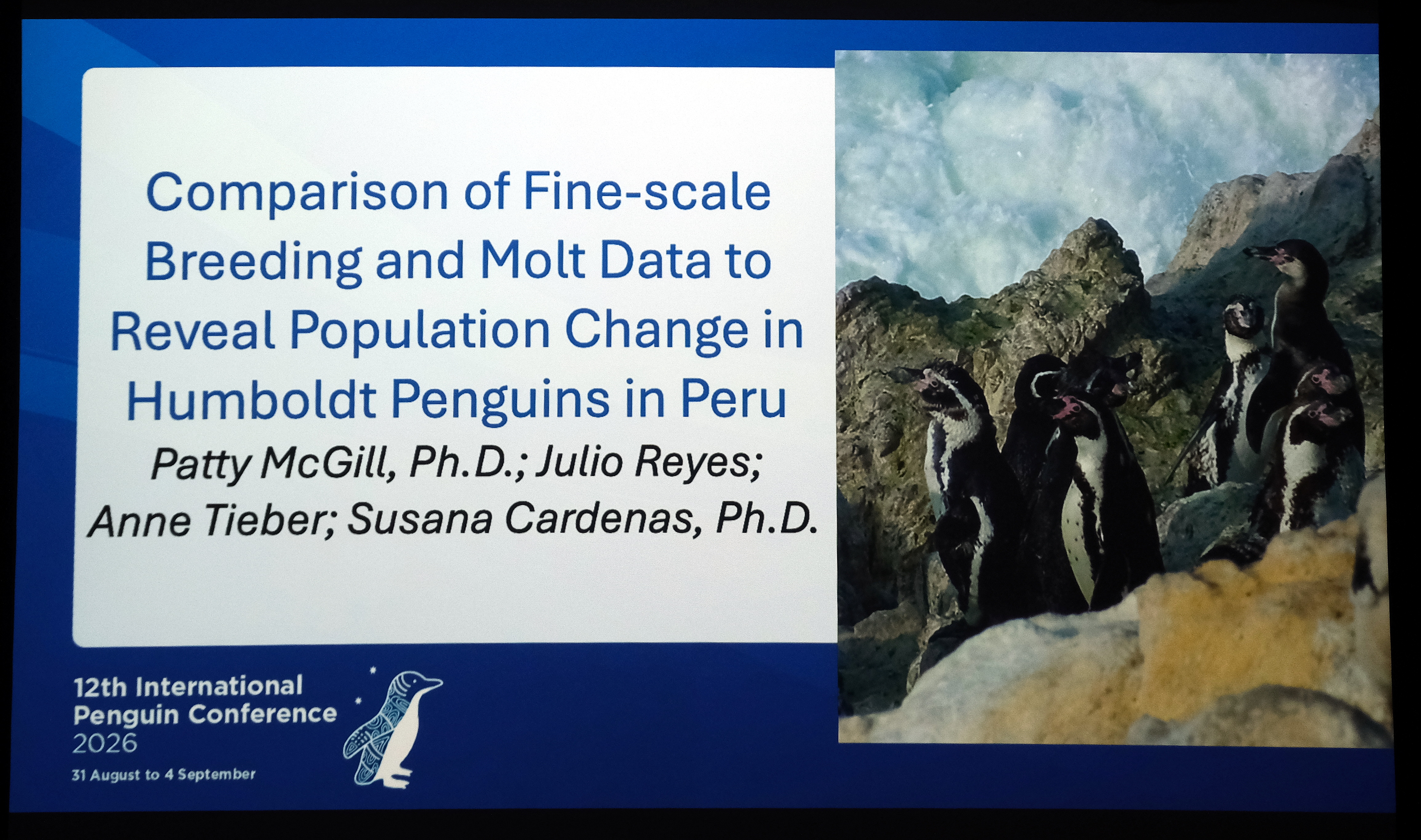
The lecture „Comparison of Fine-Scale Breeding and Molt Data to Reveal Population Change in Humboldt Penguins in Peru“ (3) by Dr. Patty McGill addressed the discussion about the best or preferred method for mapping population size in the census of Humboldt penguins.
Annual molt censuses of Humboldt penguins have been conducted at key sites on the coast of Peru since 2000. Over the years, counts showed a positive trend between 2000 and 2015 and a negative trend thereafter.
Punta San Juan (PSJ) has traditionally been the most important breeding colony in Peru. Importantly, this is the only site for which there is more than a quarter of a century of data on Humboldt penguins, including molting and breeding counts. Thus, the counts are within the same order of magnitude in all years, but in some years the breeding count is higher and in others the molt count. Both methods yielded low values in 2000, shortly after the exceptionally strong El Niño event (ENSO) of 1997/98.
Alarmingly, PSJ's counts in 2025 will be even lower than in 2000 using both methods; the reasons for this are not yet fully understood. However, since the molt counts cover significant sites along the entire Peruvian coast, the overall molt count shows a significant northward shift of the Humboldt penguins. The continued mouse narrative thus reveals a large-scale pattern that is not detected at the small-scale level of individual sites.
Of interest to the Humboldt penguins were also subsequent lectures on research results and conservation measures for the highly endangered African penguins (related to the Humboldt penguins). For example, a project was presented in which hand-reared young penguins from rescue and rehabilitation centers are released into the wild at a place where the food supply is better and the fishing pressure is lower than at the current colonies ("Re-establishment of an African penguin colony: Refining strategies for bolstering recruitment potential" (4)). This site was also a colony site some time ago, but had been abandoned by the penguins in the meantime. The aim of this reintroduction is to establish new colonies in the long term at locations with better conditions for the penguins and thus contribute to the conservation of the species. Initial results, e.g. on the return rates of the young penguins released into the wild, are positive. Perhaps this could also a model for the Humboldt penguins?
Day 4, 03.09.2026
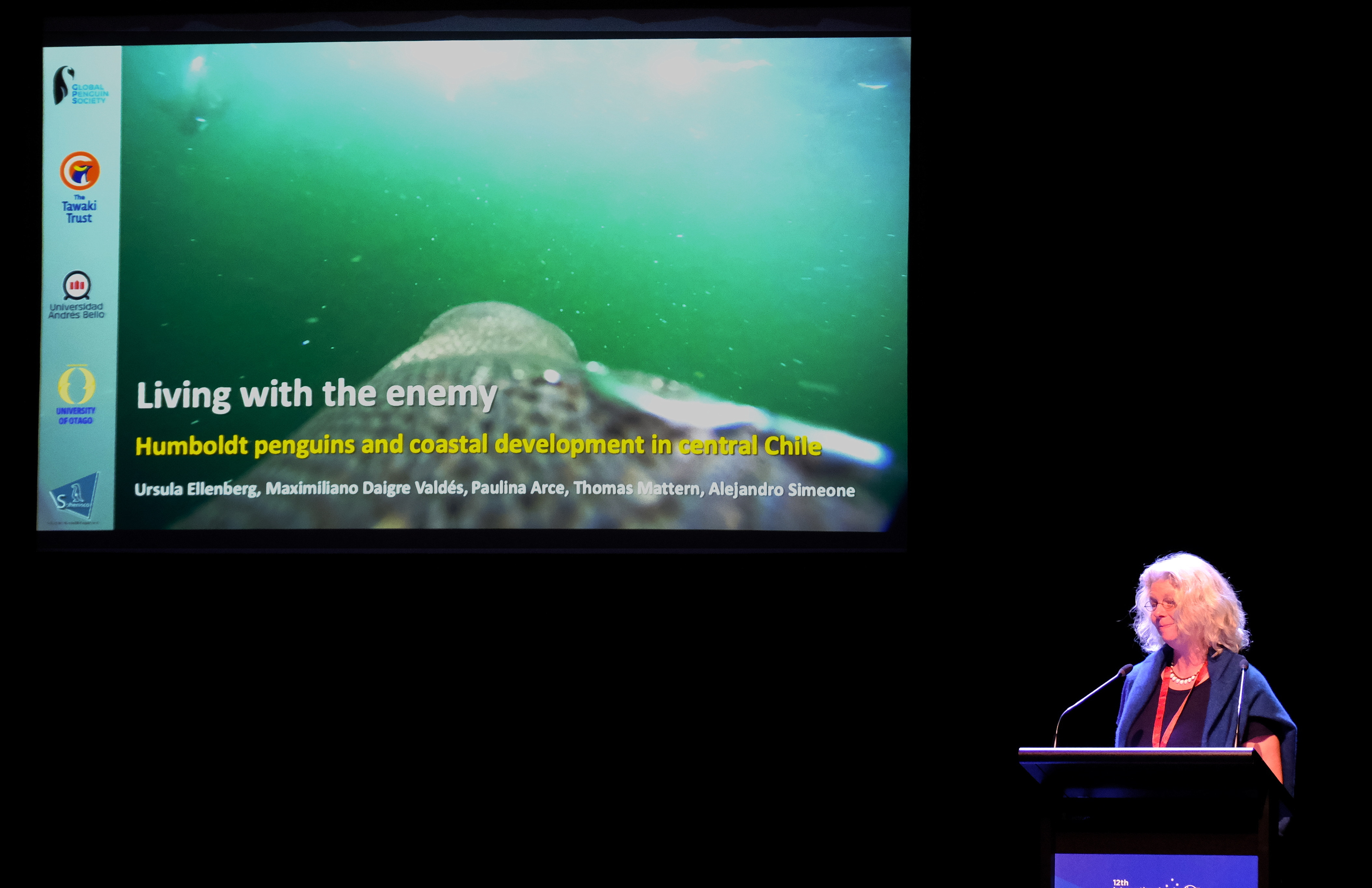
In addition to a large number of interesting lectures, e.g. on findings from the establishment of fishing ban zones in South Africa ("Penguins, prey and policy: evaluating new fisheries closures for the Critically Endangered African Penguin" (5)); also the analysis of how El Niño-driven warming and anchovy availability have on Humboldt penguins breeding phenology in Punta San Juan, Peru ("Linking El Niño-driven ocean warming and anchovy availability on Humboldt penguins breeding phenology in Punta San Juan, Peru" (6)); and another lecture on the 4th day of the conference with results of research funded by Sphenisco e.V. were also of particular interest to the needs of the Humboldt penguins: in her lecture "Living with the enemy: Humboldt penguins appear to defy fisheries and coastal development in central Chile" (7), Dr. Ursula Elleneberg showed in a comparison of two Chilean areas that Humboldt penguins can be locally stable despite fishing and coastal development, but regardless, improved marine protection remains necessary.
Humboldt penguins were recently upgraded to the "critically endangered" category in Chile. Dr. Ellenberg and her team studied their population status and foraging behavior in different environments. While populations in the Humboldt Archipelago have declined dramatically, the species appears to be thriving on Isle of Cachagua off the densely populated Valparaíso region of central Chile. Despite unfavorable environmental conditions, including the 2023/24 El Niño event, which suppressed the brood in large parts of the range, the Humboldt penguins continued to breed successfully on Isle of Cachagua.
To investigate the causes of this apparent resilience, GPS diving loggers and "PenguCams" were used over three consecutive breeding seasons. The data show predominantly nearshore foraging, with most of the diving effort occurring within 5 km of the coast and core activity within 20 km south of the island. Remarkably, more than half of the individuals surveyed foraged for food near Quintero, a highly industrialized area; occasionally, they even entered the bay and foraged for food between intense port traffic.
Industrial activity and heavy maritime traffic could effectively displace small-scale fishing from coastal areas, thereby reducing fisheries-related mortality and prey shortages. Factors related to this location seems to outweigh the immediate negative effects of pollution and disturbance. However, the apparent resilience of the Cachagua penguins should not be misunderstood as tolerance for industrial development. Such environments bring their own pressures on an already endangered species and cannot replace true habitat protection.
In the course of the challenges and opportunities of nature conservation in connection with coastal development, the emergence of improved marine protection is needed in the face of accelerating environmental change.
Dr. Ellenberg also thanked Sphenisco e.V. for funding the research work. (see also article "Humboldt Penguins on the Trail" of Sept. 13, 2026).
The conference day ended with a visit to the Phillip Island Visitor Center. After a "Water Ceremony", the conference participants were able to watch the return of hundreds of little penguins from the sea to their breeding colony after dusk. An impressive experience!
Day 5, 04.09.2026 / Final day
On 04.09. the 12th International Penguin Conference came to an end; packed with a great wealth of information, research results and exchanges, which can only be reproduced in excerpts in this article (see program IPC12).
Before the award of the best lecture, farewell and conclusion in the afternoon, there were again a large number of lectures on the last day. On the final day, there was less a focus was on the Humboldt penguins themselves, but there were a number of lectures on current technical developments that could also further develop research on the Humboldt penguins. Keywords here are: AI-supported evaluation of images from cameras permanently installed at colonies; AI-supported evaluation of sound recordings for counting colonies, including distinguishing individuals based on their calls; use of "event cameras", which essentially record movements and thus enable data collection at penguin colonies with low power consumption and memory requirements, etc.
These modern technologies thus also close the loop to the lecture of the opening day (see Part 1: "Why count penguins?"), which critically questioned the meaningfulness of the continuous "counting of penguins", in view of limited resources and the resulting question of whether concrete conservation and protection measures should not be prioritized. The use of the above-mentioned and other modern technologies could contribute to carrying out monitoring more effectively and, above all, more cost-effectively.
Unfortunately, there was a lot of depressing news to be heard at the conference on the developments and the continued existence of the penguins, but also hope-giving things. In any case, the necessity of commitment to the penguins will remain indispensable. Be it through research, educational work, protective measures, public relations and political work. Sphenisco e.V. and its commitment to the Humboldt penguins is and will certainly remain important in the long term.
The final declaration of the 12th International Penguin Conference and the IUCN Penguin Section can be found in the article "Penguins warn us of a rapidly changing planet".
(See also Part 1, which explores questions such as "What helps African and Humboldt penguins?", "Why count penguins?", "From prediction to preparation of conservation measures" and the "Influence of El Niño on breeding activity and success of Humboldt penguins").
Volker Eggert and Isa Karbstein
Notes
(1) Simeone, A. 2026. Declining Humboldt penguins in Chile: trends, possible causes and future perspectives. Presentation IPC12.
(2) Zavalaga, C. 2026. Do Humboldt penguins forage differently across colonies? A multi-site tracking study. Presentation IPC12.
(3) McGill, P. 2026. Comparison of Fine-Scale Breeding and Molt Data to Reveal Population Change in Humboldt Penguins in Peru. Presentation IPC12.
(4) Hagen, C. 2026. Re-establishment of an African penguin colony: Refining strategies for bolstering recruitment potential. Presentation IPC12.
(5) McInnes, A. 2026. Penguins, prey and policy: evaluating new fisheries closures for the Critically Endangered African Penguin. Presentation IPC12.
(6) Moy, F. 2026. Linking El Niño-driven ocean warming and anchovy availability on Humboldt penguins breeding phenology in Punta San Juan, Peru. Presentation IPC12.
(7) Ellenberg, U. 2026. Living with the enemy: Humboldt penguins appear to defy fisheries and coastal development in central Chile. Presentation IPC12.
translated by Erich Greiner