Landau, May 25
The NGO Acorema (Peru) and the Fundación Sphenisco Chile launched the campaign “¡Salvemos juntos al pingüino de Humboldt!” (1) to mark World Penguin Day 2026. The survival of Humboldt penguins is threatened by highly pathogenic avian influenza (H5N1), El Niño, overfishing, bycatch, and disturbances or destruction of breeding sites. As of the end of 2025, the Chilean population had declined by 63% compared to 2021/22. Currently, there are only 1,001 breeding pairs remaining (2). This sharp decline prompted Chilean authorities to upgrade the species’ conservation status from “vulnerable” to “endangered.” In Peru, the population declined by 70% in 2024 compared to 2023. At the beginning of 2024, only 5,035 molting penguins were counted (3). The sharp decline in the population could be dramatically exacerbated by a new outbreak of avian influenza—detected in Chile in March 2026—and an El Niño phenomenon forecast for late 2026.
An Overview of Activities for World Penguin Day
Organizations and institutions in Chile, Peru, and Germany responded to the call issued by Acorema and the Fundación Sphenisco Chile: “Let’s save the Humboldt penguin together!”.
Hashtag “Save the Humboldt Penguin”
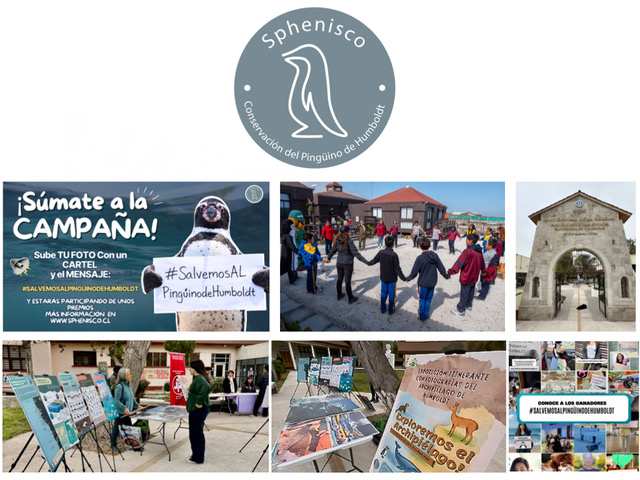
The Fundación Sphenisco Chile called on people to take action on social media to raise awareness about the protection and conservation of the Humboldt penguin: “Upload a photo to Instagram featuring a poster with the hashtag #SalvemosAlPingüinodeHumboldt.” The goal of the campaign is to stimulate debate about biodiversity conservation and the ecological value of one of the world’s most important marine ecosystems, the Humboldt Archipelago.”
Student gathering
At the “Pingüino de Humboldt” National Reserve, the Sphenisco Chile Foundation organized a gathering of children from the mountains and children from the coast. At CONAF’s Environmental Education Center (4), students from Punta Colorada and Punta de Choros learned about “their” environment, enabling them to share their different experiences. The students learned about the Humboldt Archipelago, its biodiversity, and the importance of protecting the endangered Humboldt penguin (see photos). “Hands-on learning and exploring our local area left a lasting impression. It was an experience that brought people together, educated them, and raised awareness for the future,” the organizers concluded.
Statement on the Crisis
The Fundación Sphenisco Chile posted the following statement on social media: “Today (...) we are raising our voices for a species that is seriously threatened: the Humboldt penguin. Its situation is critical. It has been reclassified from ‘vulnerable’ to ‘critically endangered.’ In recent years, the population in Chile has declined by 63%. This is not just a number. It is the silence in the colonies that were once teeming with life. It is an ecosystem that is falling out of balance. It is a clear sign that something is wrong. Today, more than ever, it is essential that we take action.
We need to reinstate the decree recognizing the Humboldt penguin as a natural monument of Chile in order to strengthen its protection and advance concrete measures for its recovery.
“If the Humboldt penguin disappears, we will not only lose a species; we will lose a part of our identity, our ocean, and our history. It is not too late yet (...)”.
Presentations at the University of La Serena
From April 27 to 30, Sphenisco Chile invited the public to visit the photo exhibition “Discovering the Humboldt Archipelago: A Source of Life for Humanity!” at the University of La Serena: “Science, conservation, and environmental education offer (...) a unique experience that connects you with one of our planet’s most valuable ecosystems.” Experience the exhibition “Discovering the Humboldt Archipelago,” where the team from Sphenisco Chile will share their knowledge, stories, and the urgent need to protect this area, which is so vital for biodiversity. In addition, the foundation invited Dr. Guillermo Luna-Jorquera to give a lecture on the topic “Science and Urgency: The Critical Status of the Humboldt Penguin in the Humboldt Current System.”
Penguin Week in Pisco, Peru
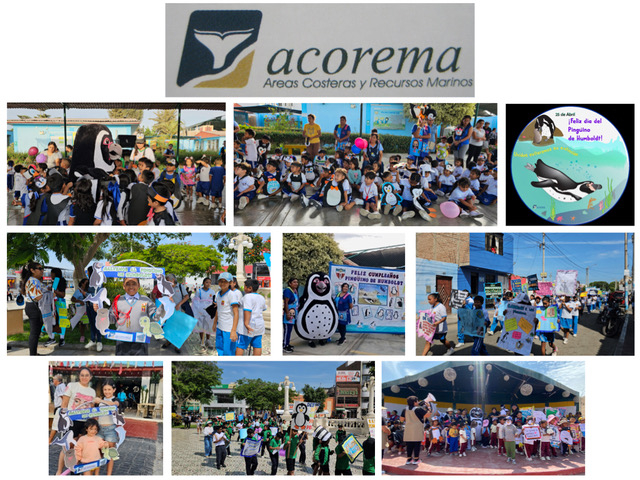
Acorema linked Earth Day with World Penguin Day and also organized an information week on endangered species, with a special focus on the threatened Humboldt penguins. Sphenisco’s partner organization visited daycare centers and schools (5). Led by the mascot Pisko, the children learned about the topic, did crafts, designed posters and signs, and danced and sang a lot. Among other things, the children “congratulated” the Humboldt penguin on World Penguin Day with the song “Cumpleaños feliz” (6) and a homemade cake (see photos).
On April 24, the NGO mobilized around 5,000 people—students, teachers, and parents—in downtown Pisco. Acorema wrote: “We are uniting our voices for the Humboldt penguin! Yesterday, April 24, was no ordinary day. After spending an entire week carrying out activities in the Pisco region together with various partners, we took to the streets full of joy. Together with students and teachers from various schools (5), staff from the Paracas National Reserve and the “System of Islands, Islets, and Headlands of Guaneras” (7) (…) as well as the Pisco Provincial Department of the Environment, we spent an unforgettable day (…) We organized a demonstration in which we marched through the center of Pisco carrying posters designed by the children. Every message on the streets became a voice for the protection of the Humboldt penguin. The impact of this campaign extends far beyond the moment. It raises questions, sparks empathy, and motivates more people to get involved in protecting endangered species. Thank you to everyone who joined the initiative and made their voices heard."
A day later, on World Penguin Day, Acorema also brought the message “Let’s save the Humboldt penguin together!” to the El Chaco promenade. (8)
Penguin Day and the "Show Your Face!" Campaign
In Germany, Hellabrunn Zoo in Munich, the zoos in Rostock, Saarbrücken, and Schwerin, and Walsrode Bird Park organized well-attended awareness days to raise awareness about the drastic decline in the population and collect donations for Sphenisco’s work.
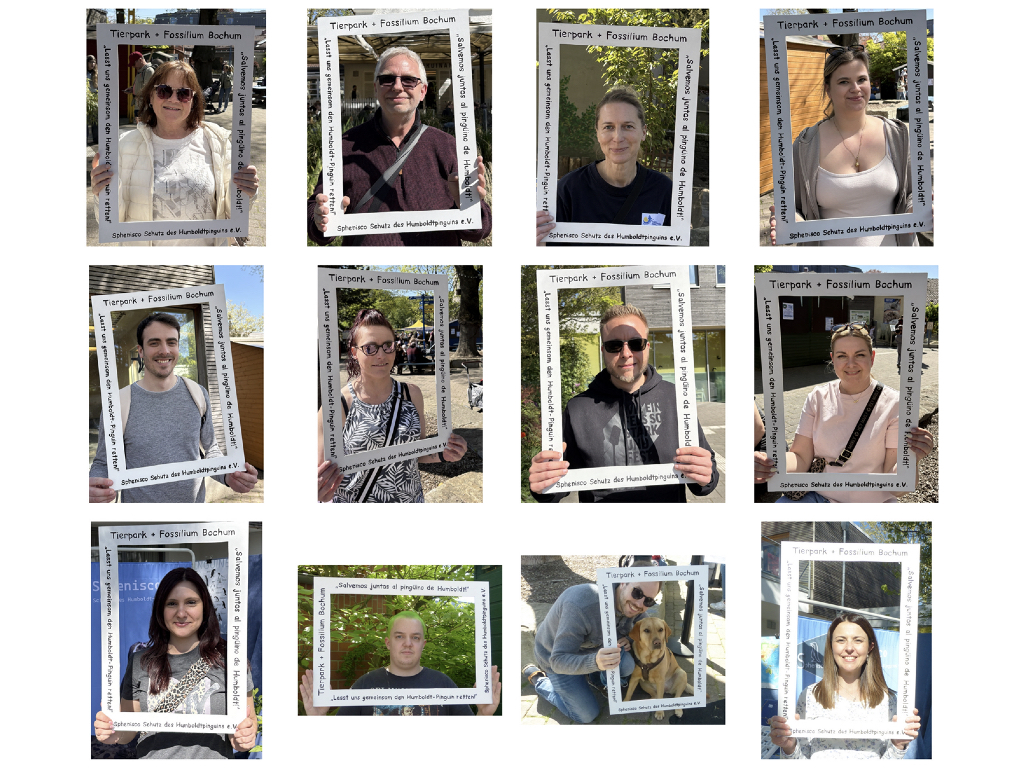
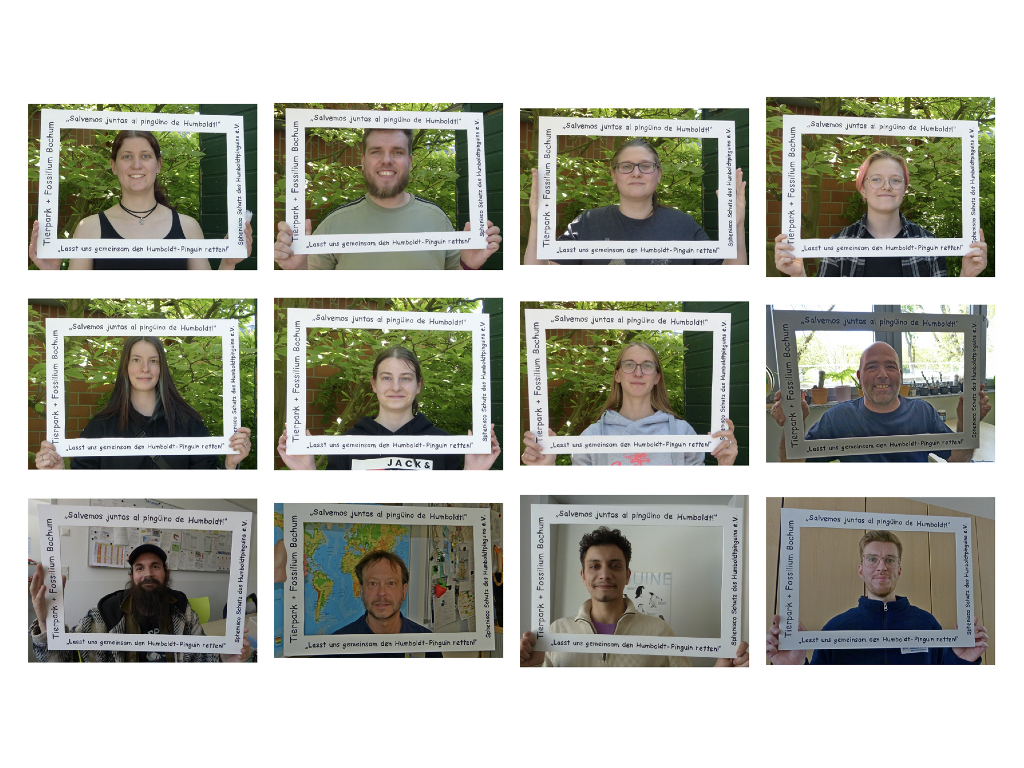
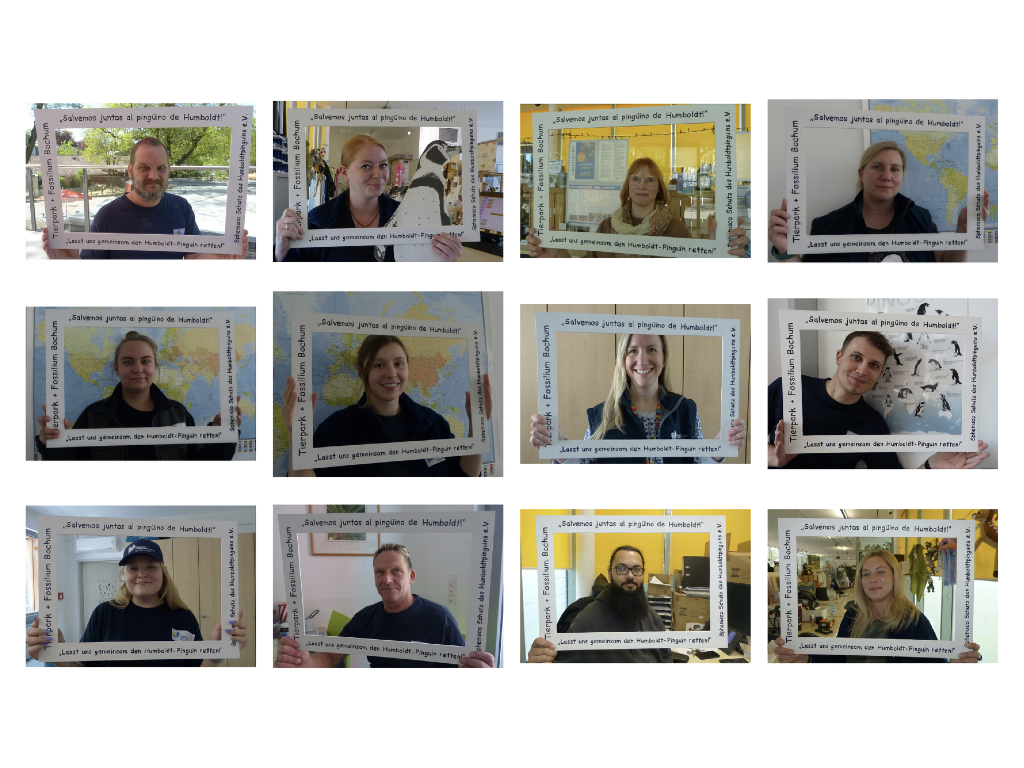
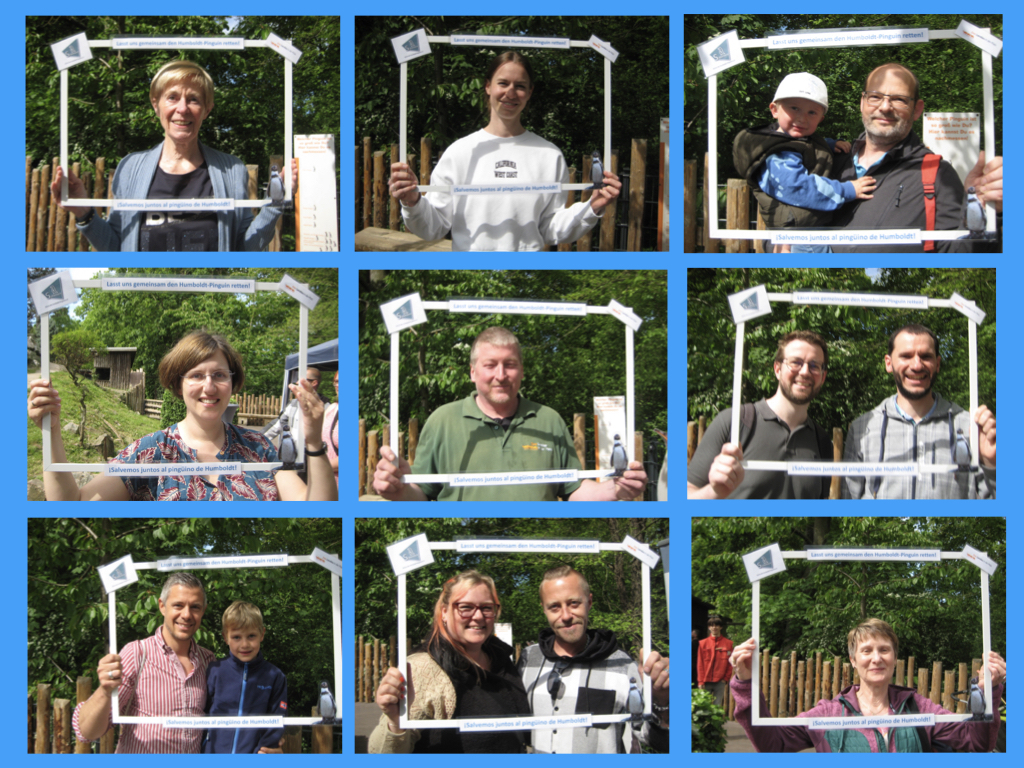
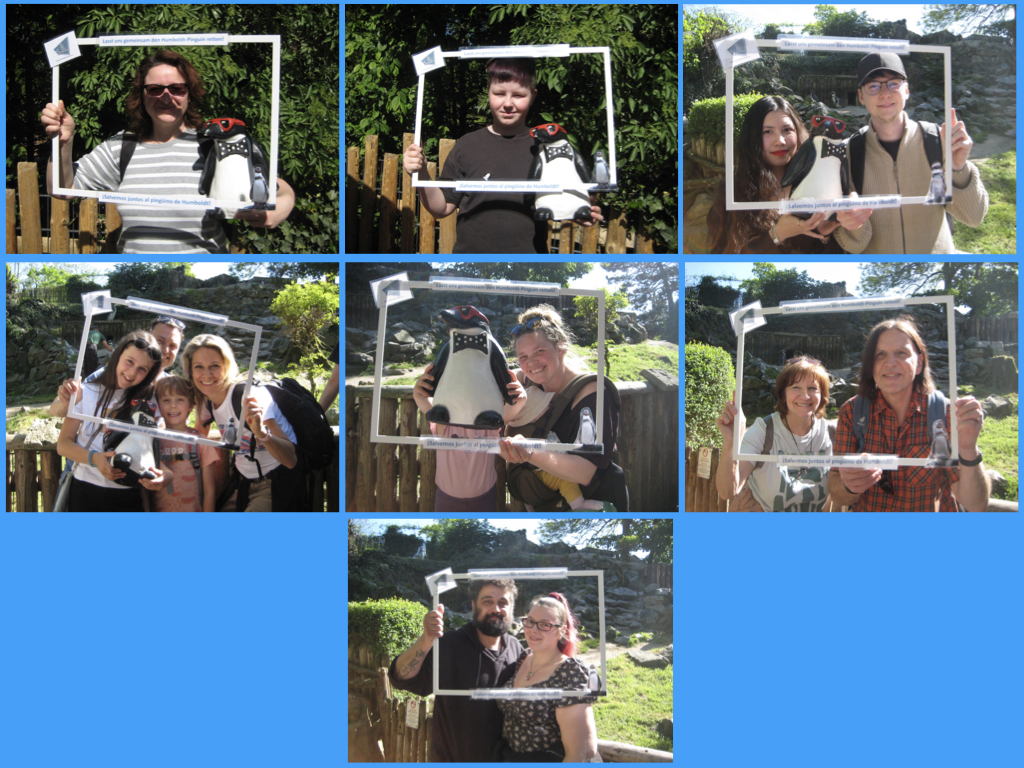
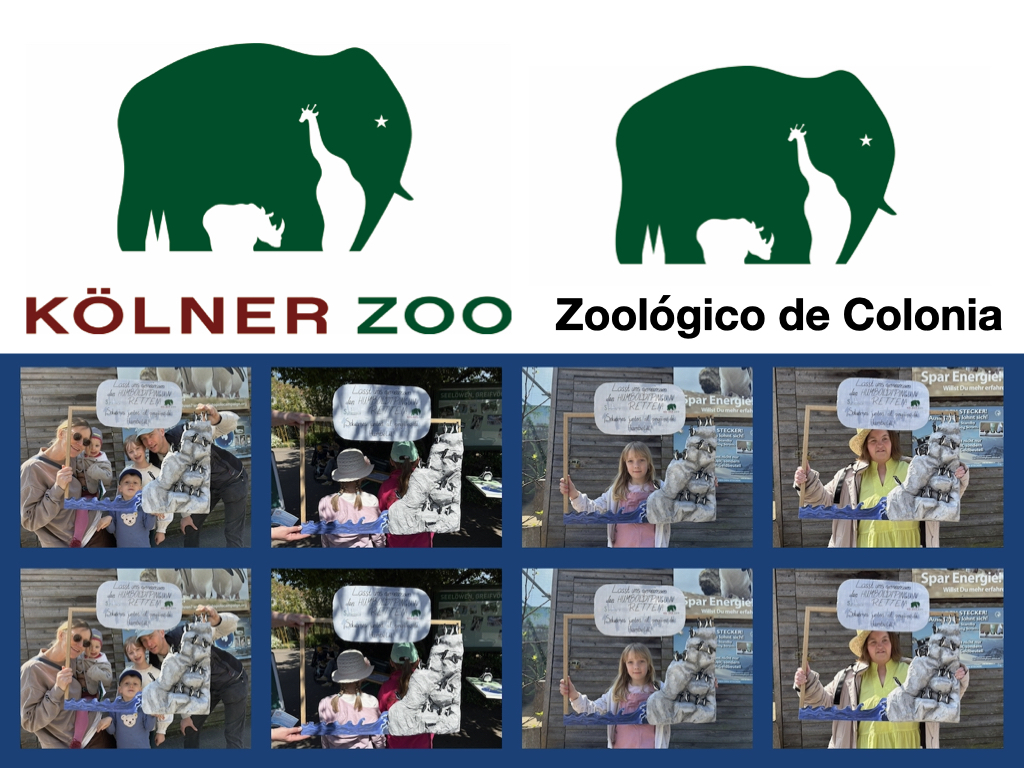
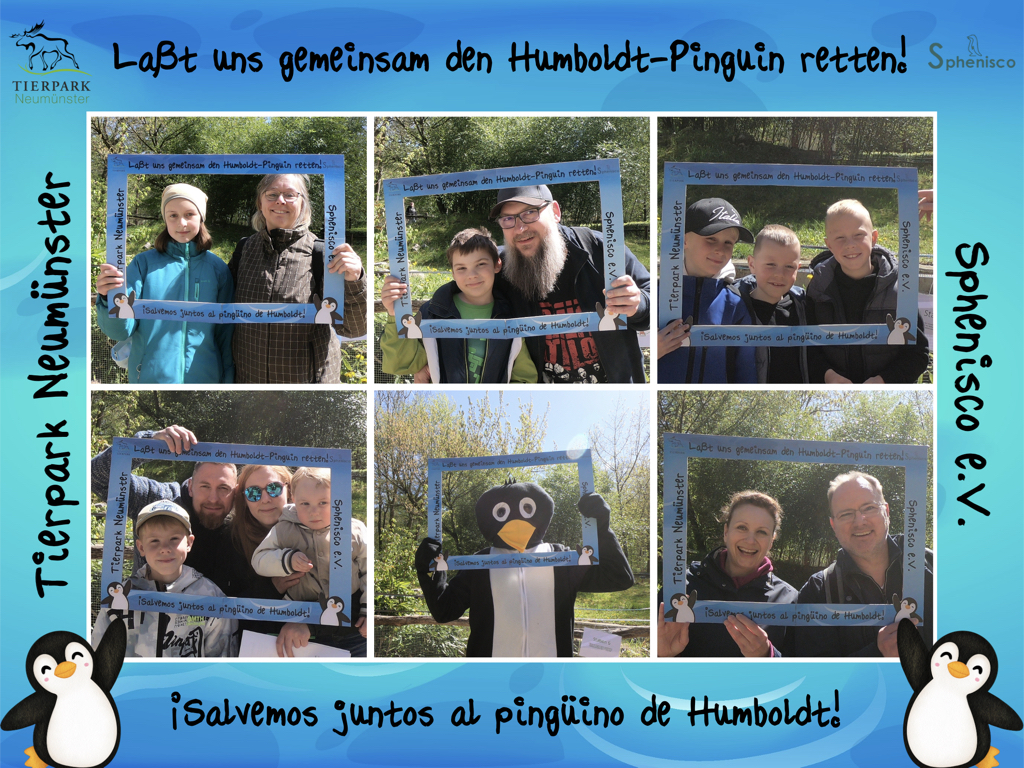
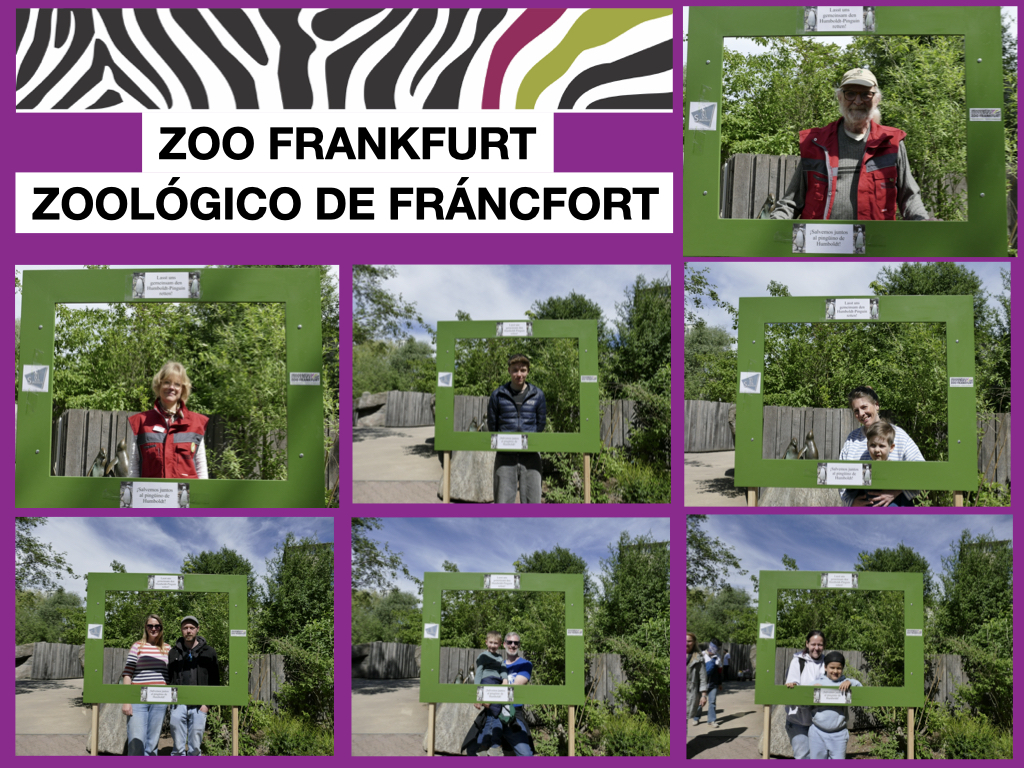
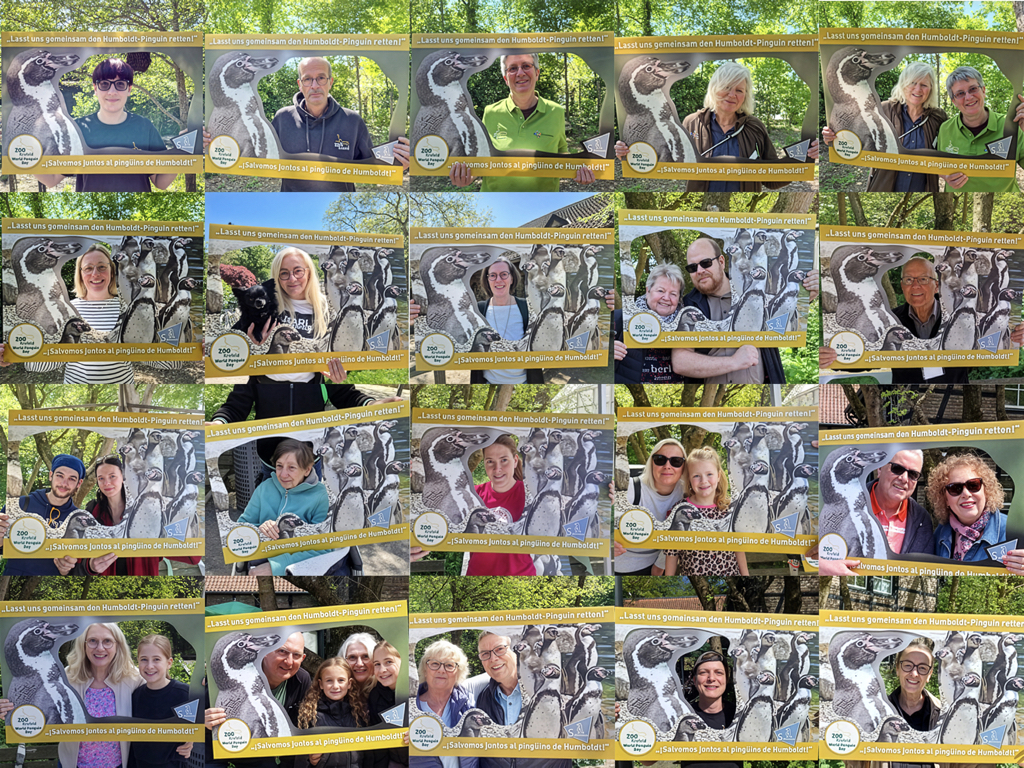
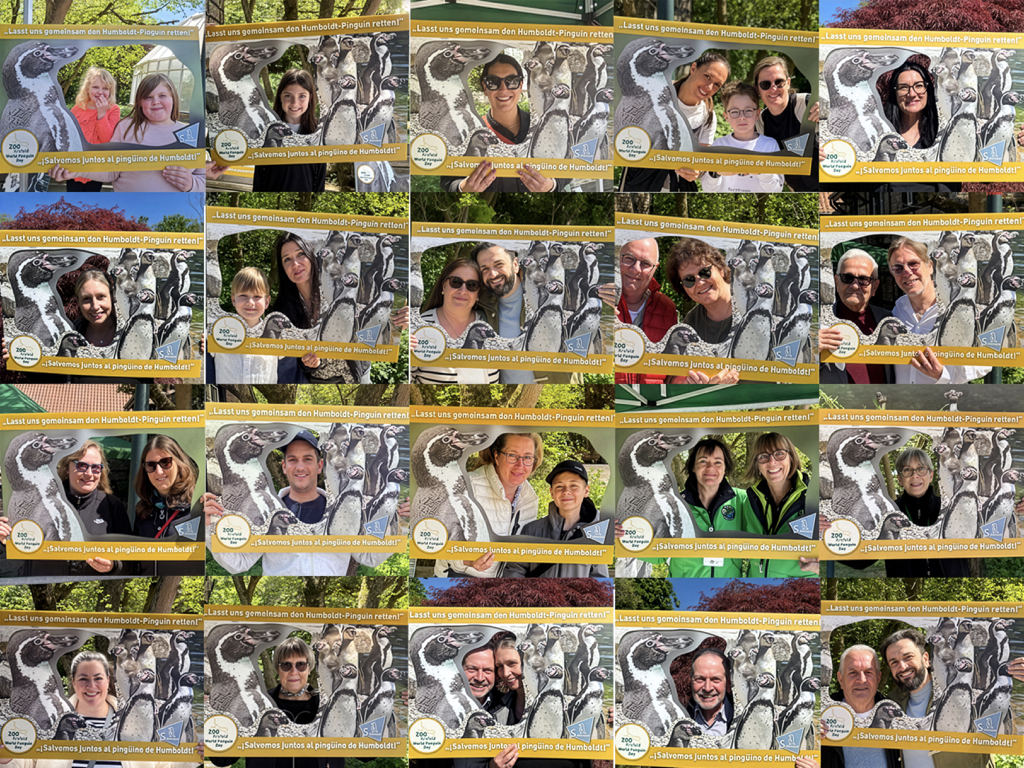
The animal parks and zoos in Bochum, Halle, Frankfurt, Cologne, Krefeld, Landau, and Neumünster, as well as Luisenpark Mannheim and the Spreewelten Lübbenau water park, also organized special events and called on visitors and staff to “stand up for the Humboldt penguin” (see the “Stand Up!” campaign, March 30, 2026). Halle Mountain Zoo: “Join us in taking a stand for the protection of this endangered species: Your photos will be shared worldwide via Sphenisco.” Krefeld Zoo: “Sphenisco’s campaign is simple and effective.” Last but not least, Luisenpark Mannheim: “All eyes on the penguin! Undoubtedly one of the most popular birds on Earth—and at Luisenpark.” The campaign was a success. 474 people personally lent their support to the effort to save the Humboldt penguins by submitting their photos (see photos).
People using the Chilean hashtag, in personal photos taken at German zoos, and in the center of Pisco are sending a clear message: “There are many of us; we are the majority, and we are reminding those in charge in Chile and Peru of their duty to ensure the survival of Humboldt penguins. We know that governments and authorities cannot prevent avian flu or a potential new El Niño.” “But we also know that it is possible to protect breeding and feeding grounds that have not yet been protected, to better enforce existing laws and regulations, and to promote sustainable fishing. There is no shortage of knowledge or rules. What is lacking is action. It is not too late to do what needs to be done.”
W. K.
notes
For the sake of readability, the generic masculine form is used in this article. Unless otherwise indicated, references to people in this article apply to all genders.
(1) German: Let’s save the Humboldt penguin together!
(2) Simeone, A., P. Arce, M. Daigre, U. Ellenberg, T. Mattern. 2026. Size of the breeding population of the Humboldt penguin on islands in north-central Chile (2024/2025). Final report: Proyecto Sphenisco. Santiago, Chile. 18 S.
The data refers to breeding pairs. 1,001 breeding pairs correspond to 2,002 individuals. In addition, there is an unknown number of immature and non-breeding penguins.
(3) Article “Humboldt Penguin Population Reduced by Nearly Two-Thirds” dated March 25, 2026, on the Sphenisco website.
(4) National Forestry Corporation (CONAF). The Chilean forestry agency, which is also responsible for nature reserves.
(5) Participating schools: José de la Torre Ugarte School, Julio César Tello School, Nuestra Señora de Guadalupe School, School No. 182, School No. 189.
(6) English: Happy Birthday.
(7) In Spanish: „Sistema de Islas, Islotes y Puntas Guaneras“.
(8) El Chaco. The beach and boardwalk of the village of Paracas on Peru’s south coast, a major tourist attraction in the region, famous as the starting point for visits to the famous Ballestas Islands and the Paracas National Reserve.
translated by Claudia Fawer