Landau 12. November 2026.
In early July 2026, researchers Dr. Thomas Mattern (1), Paulina Agre (2), and Maximiliano Daigre Valdés (3) once again investigated the foraging of Humboldt penguins on the island of Pájaros Niños, Algarrobo, central Chile. The research is part of the investigations on population, breeding success, and foraging, conducted since 2021 under the direction of Dr. Alejandro Simeone (4). The long-term research project was commissioned by Sphenisco and is funded by the Karlsruhe Zoo Species Protection Foundation, Dresden Zoo, and the Hagenbeck Zoo Support Association. In November 2026, Thomas Mattern presented the report "Humboldt Penguin Research, Chile, Winter 2026" on the investigations conducted from July 1 to 8, 2026 (PDF file Humboldt Penguin Research, Chile, Winter 2026).
Dr. Thomas Mattern summarizes the results for foraging and preparations to install a “HumboldtCam” system as follows:
"The field season for studying the hunting behavior of Humboldt penguins in Chile in June and July 2026 was marked by harbingers and the approach of a strong El Niño climate phenomenon. This brought unsettled weather that excluded any island visits, as initially persistent southwest winds caused strong swells, making landings too dangerous, and then heavy rain caused massive flooding in the region around Coquimbo. Accordingly, activities during this southern winter were limited to those that could be carried out on the mainland.
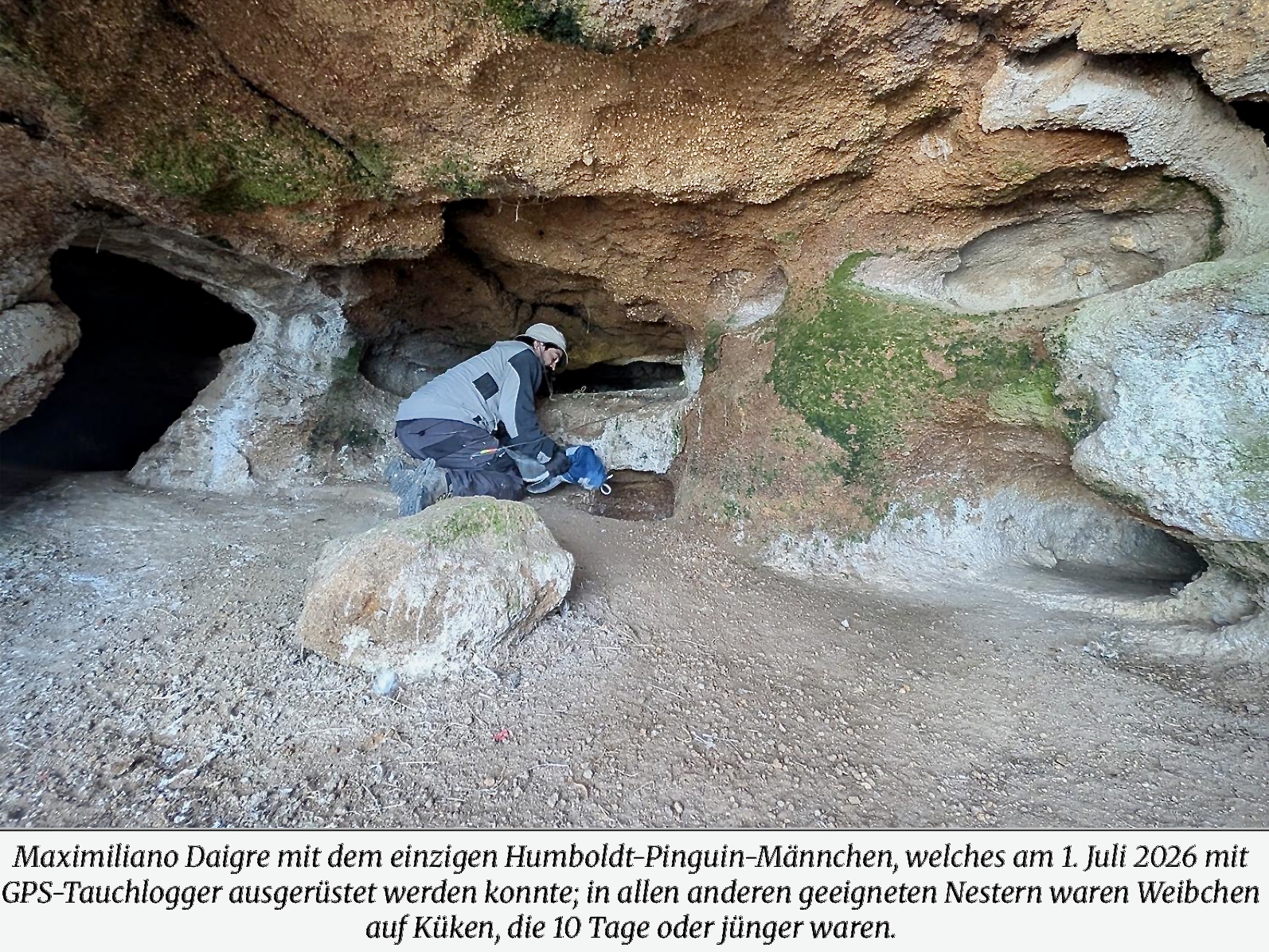
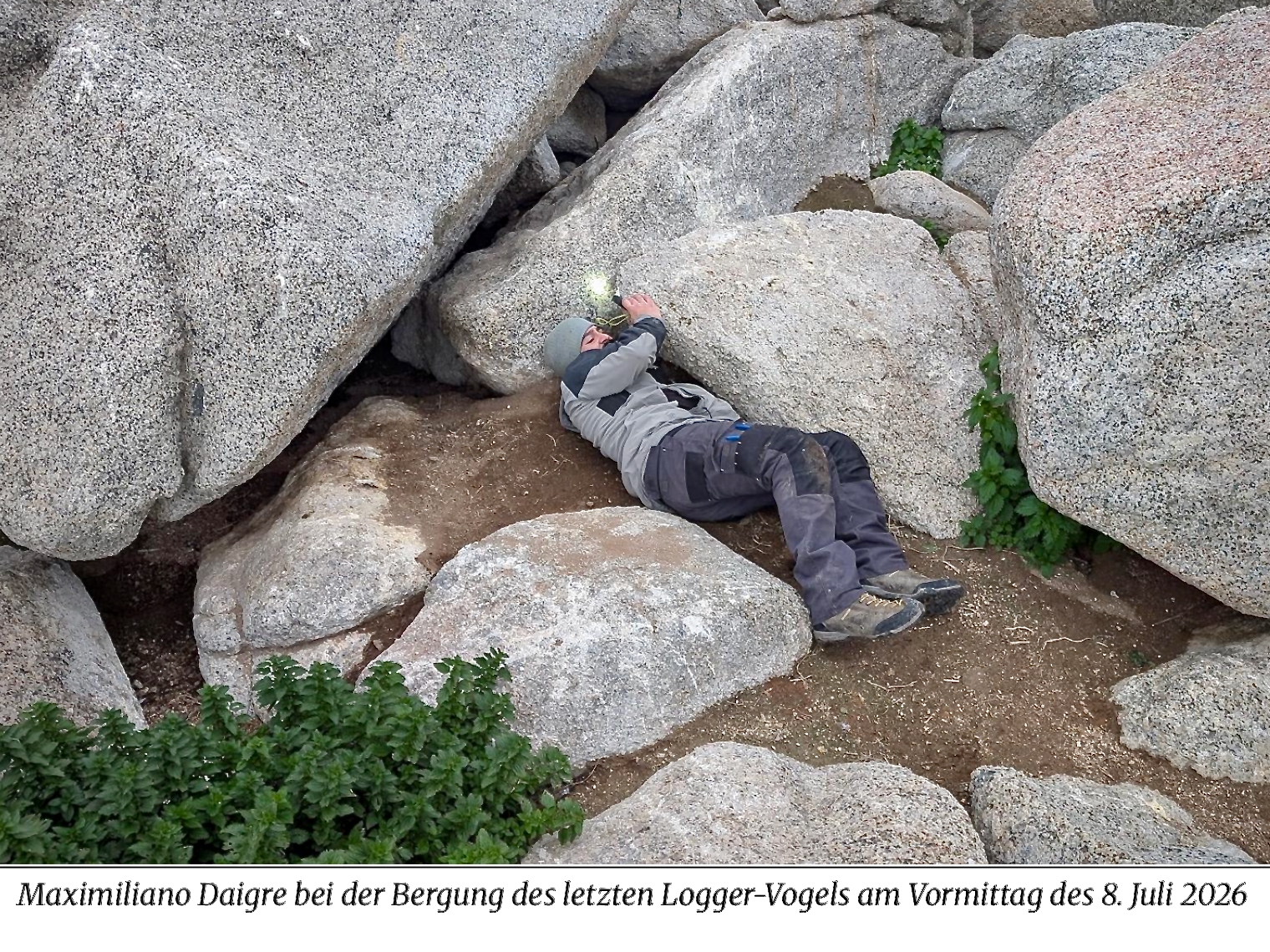
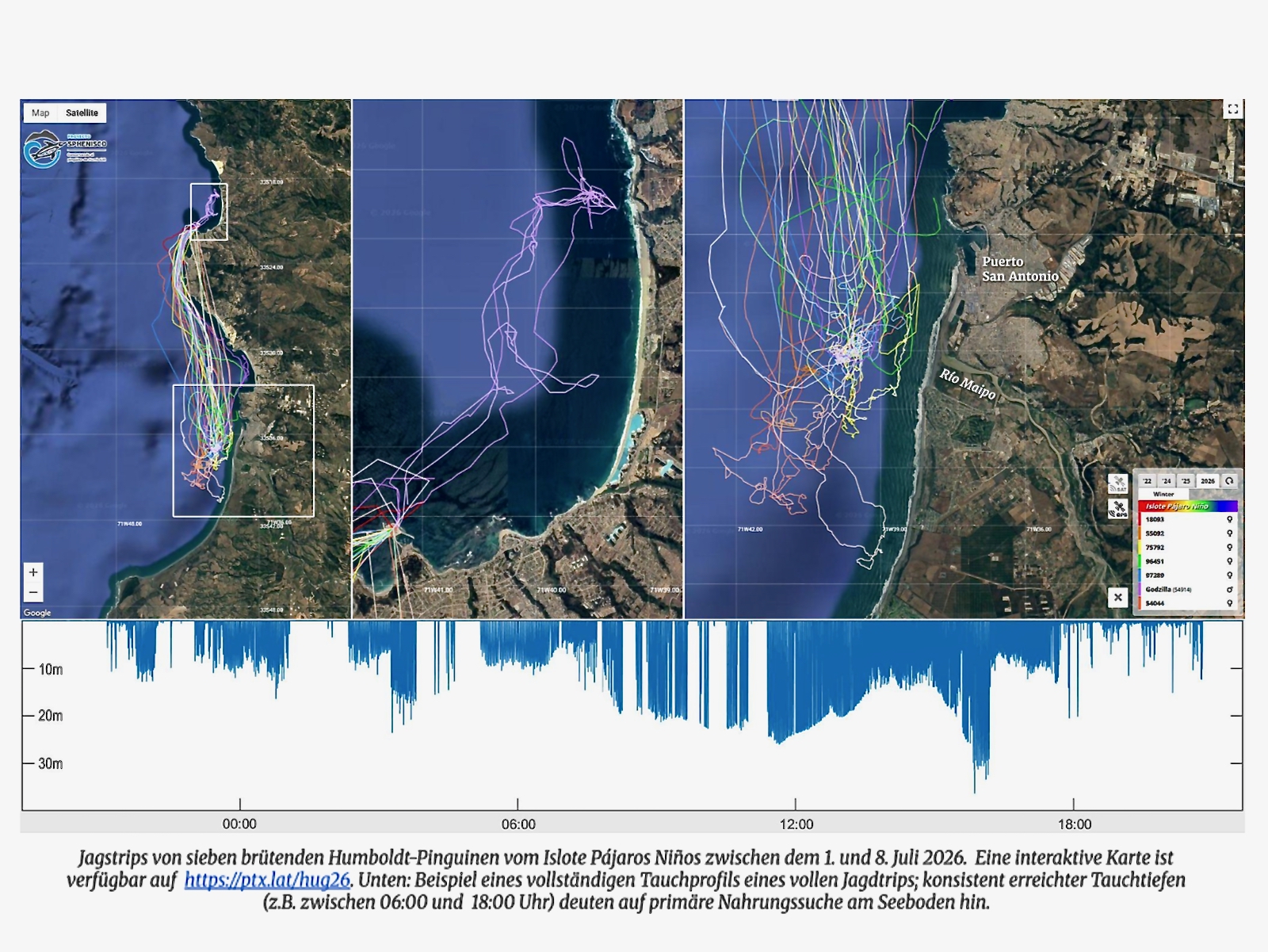
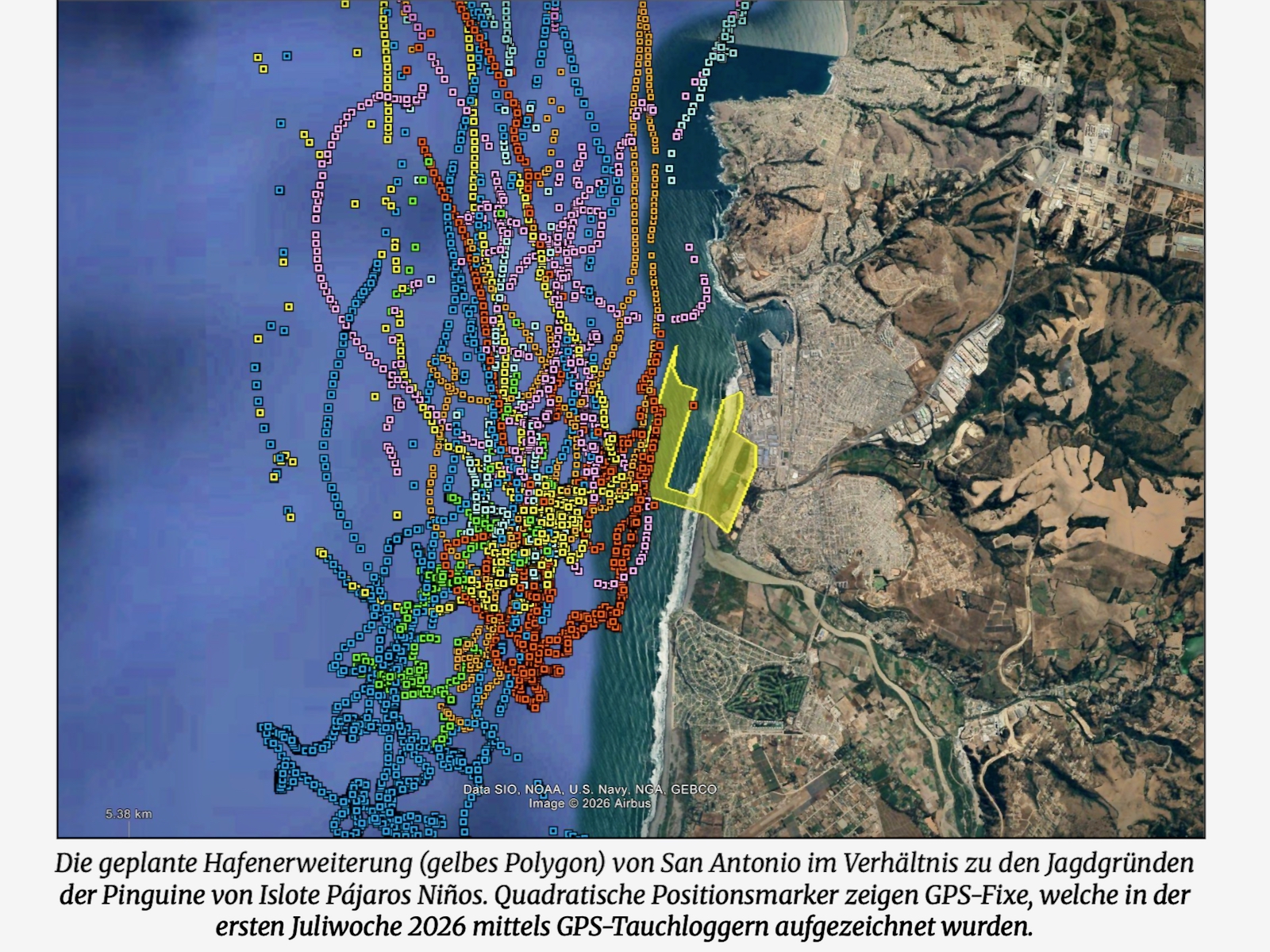
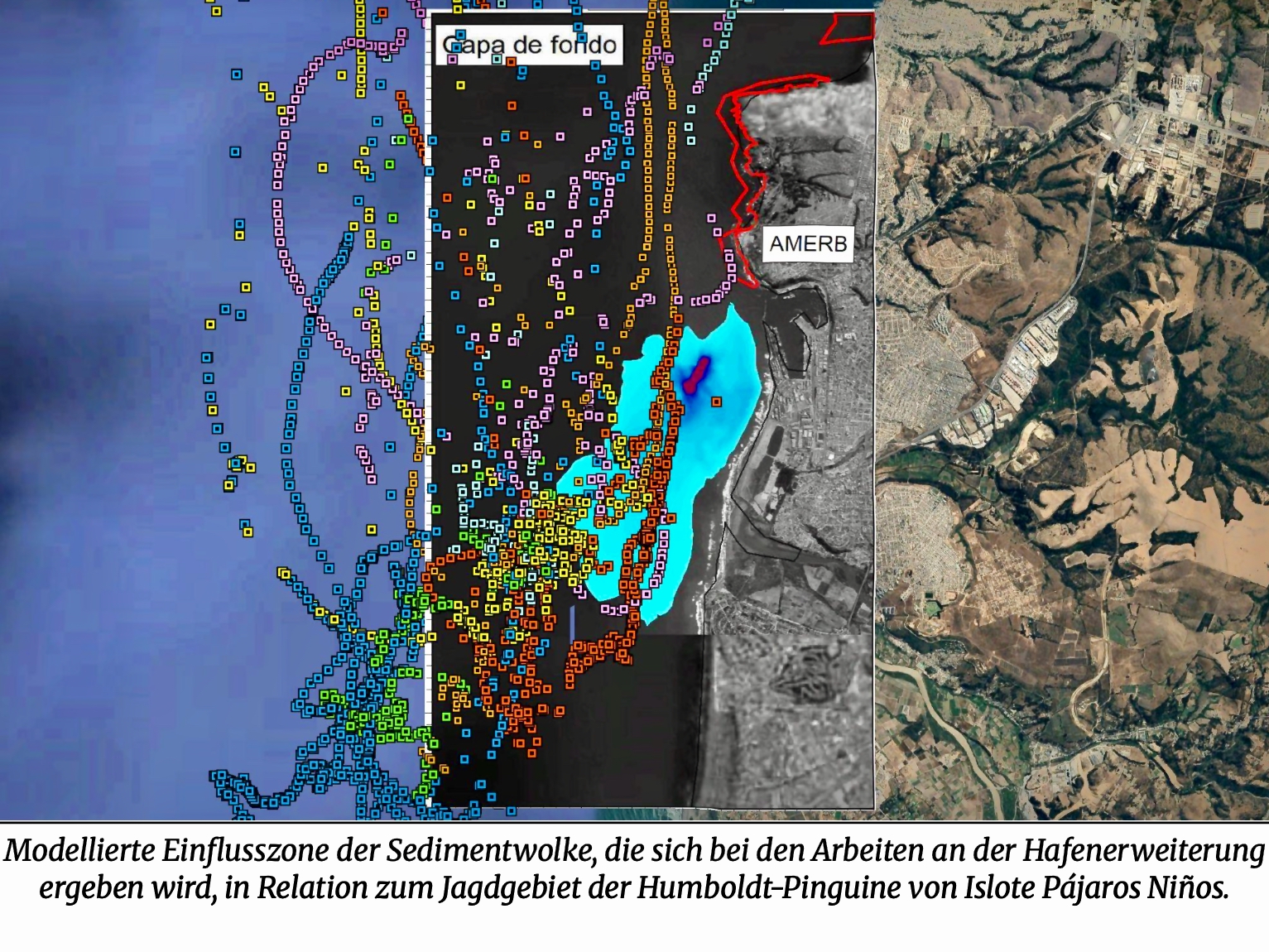
Between July 1 and 8, 2026, a total of seven Humboldt penguins (6 females, 1 male) of Islote Pájaros Niños, Algarrobo, were equipped with GPS dive loggers during the early chick rearing phase. With the help of the devices, the movements of the birds at sea could be recorded, both in terms of the penguins' geographic distribution and diving behavior. A total of 24 hunting trips were recorded, during which the penguins spent between 6.9 and 26.3 hours at sea (mean: 19.5 h), traveled between 5.5 and 35.7 km from their colony, and covered distances between 20.9 and 85.0 km. A total of 16,815 dives were recorded, corresponding to 168 to 1,095 dives per trip. The penguins reached maximum diving depths of 27.1 – 63.8 meters. The average dive depth per trip ranged between 7.1 and 24.6 meters, which is due to numerous shallow dives associated with travel movements. As in the previous year, the penguins swam southward on 21 of the 24 trips near the coast (<5 km from the continent) to search for food off the port city of San Antonio and at the mouth of the Río Maipo. The recorded data revealed possible problems with anthropogenic influences: 1. the port of San Antonio is to be expanded, and 2. recurring illegal dumping of waste in the Río Maipo, especially when heavy rainfall is forecast. Both very likely have consequences for the quality of the marine habitat, which is vital for the penguins of Islote Pájaros Niños.
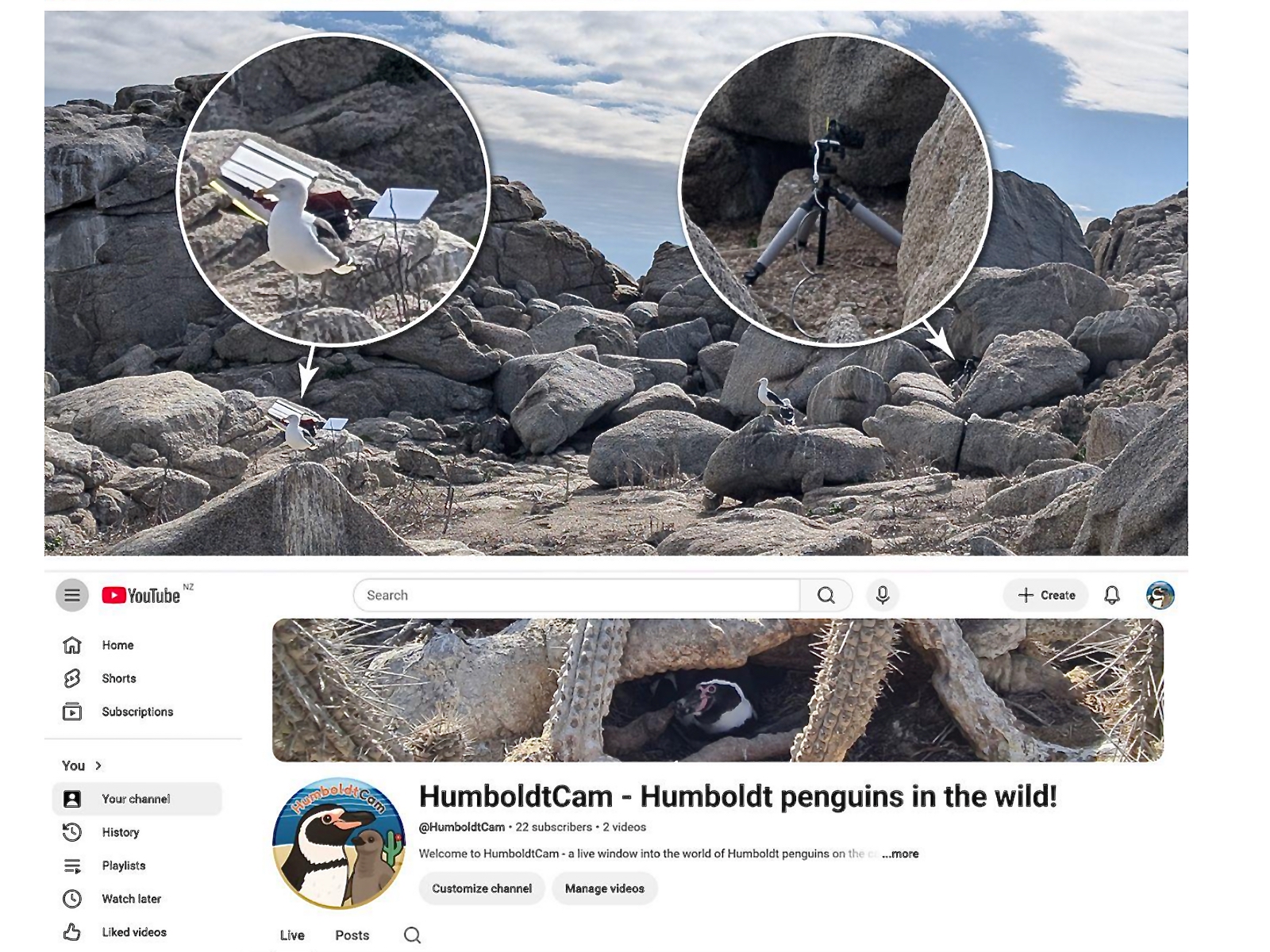
The weather-related loss of further fieldwork was compensated by the development of the HumboldtCam system. The system, which in the future will provide a permanent video stream from a selected penguin nest to the internet primarily serves public relations. Experience with comparable systems such as our TawakiCam (https://tawaki.cam) shows that such systems strengthen personal connections between the public with endangered species and thus increase awareness of problems. The system is based on the already active TawakiCam. Development includes procuring the necessary hardware (e.g., camera, solar components, batteries, microcomputers, network infrastructure), assembling the system, developing control software, and conducting initial field tests in the colony of Islote Pájaros Niños. The tests showed that the HumboldtCam must be installed in less populated areas, such as Isla Choros or Isla Tilgo, because connectivity via satellites is limited due to data congestion caused by competing satellite internet users. The final installation was originally planned for the Chilean summer of 2026/27. Since there are currently no active nests in the north due to El Niño, the installation is now scheduled for the southern winter of 2027 (June/July).
A rain-free day was used to inspect Lobos Island from the mainland, about 30 km north of Algarrobo. The island is considered a potential breeding area for Humboldt penguins. Although two penguins could be observed by telescope and drone, there was no clear evidence of breeding behavior on the island." (full report PDF file Humboldt Penguin Research, Chile, Winter 2026)
W.K.
Notes
To improve readability, this article uses the generic masculine. The personal designations used in the article refer – unless otherwise indicated – to all genders.
(1) Dr. Thomas Mattern. Global Penguin Society; Tawaki Trust; University of Otago, New Zealand.
(2) Paulina Agre. Andrés Bello Santiago University (UNAB; Humboldt Penguin Research Group, Santiago, Chile; University of Santo Tomás (private Chilean university with twelve regional locations.
(3) Maximiliano Daigre Valdés. Humboldt Penguin Research Group, Santiago, Chile.
(4) Dr. Alejandro Simeone. Andrés Bello University (UNAB); Humboldt Penguin Research Group, Santiago, Chile.
(5) Tracking Humboldt Penguins – Field Research on the Islands of Cachagua and Choros, article from September 13, 2025.
(6) Chilean Glaciers Foundation, NGO Ecosystems, Mingako Foundation, Cerro Alegre Wetland Foundation, and Yecos NGO.
Translated by Erich Greiner